C4ISR
Common Operating Picture (COP): How AI Supports Situational Awareness
What a common operational picture is, why data quality, provenance and latency decide its value, and where AI helps under human review.
· 10 min read · DTN Editorial
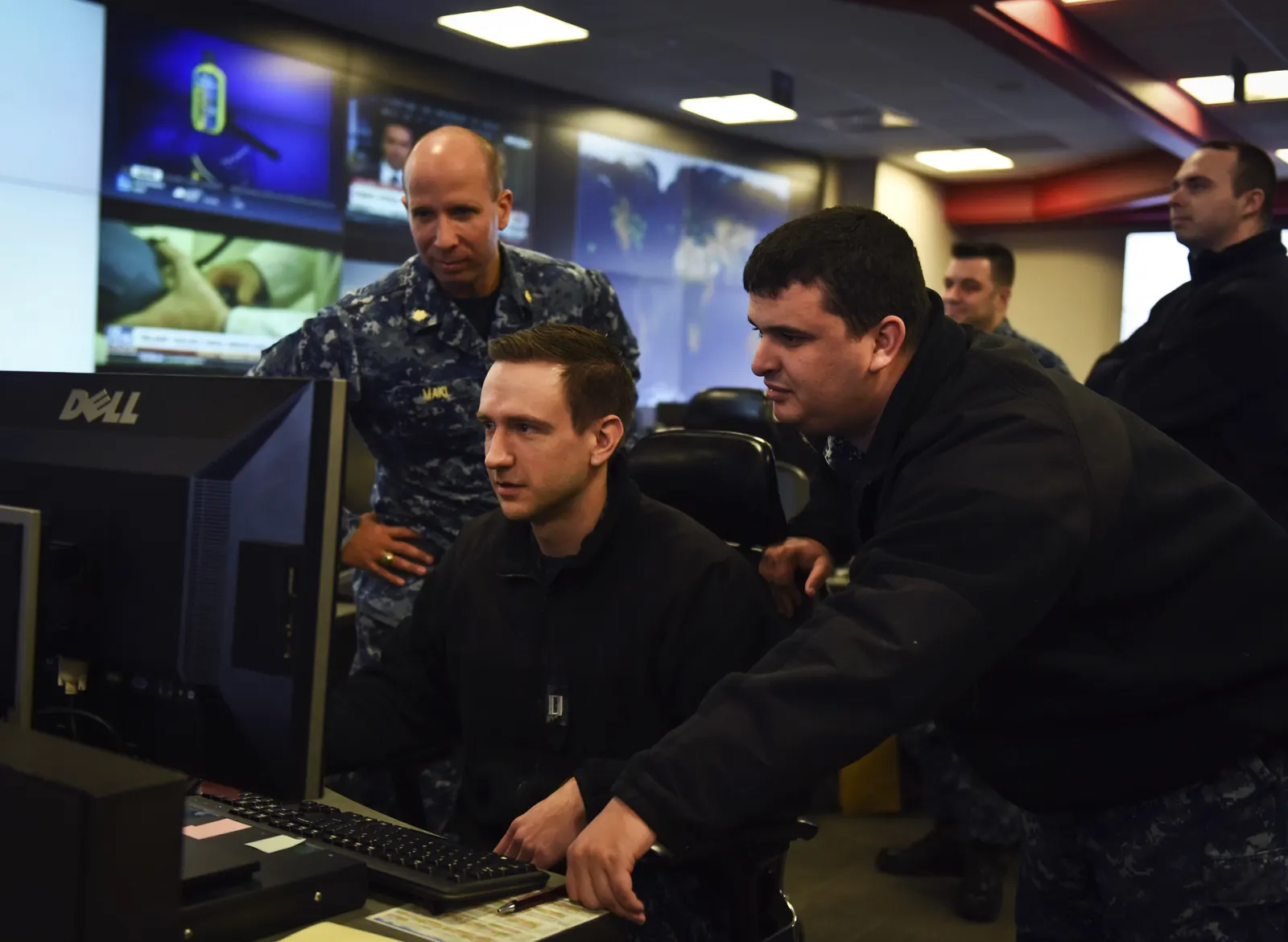
When many organisations respond to the same situation, the first problem is rarely a lack of information. It is that each one sees a different version of it. A common operating picture aims to fix that: one shared, trusted view that everyone involved can work from.
You will see both common operating picture and common operational picture used for the same concept; both are abbreviated COP, and this article treats them as synonyms. In a military common operating picture and in civil crisis management alike, the COP is a shared information product — it supports human situational awareness but is not the same thing.
This article explains what a common operating picture is, why its value depends on the data pipeline behind the screen, and how AI can help — and where it should not be trusted alone. The focus is on information integration and decision support, not on any specific military system.
What is a common operating picture?
A common operating picture (COP) is a shared, continuously updated presentation of relevant information about a situation, accessible to multiple users and organisations. Typical content includes the location and status of assets, reported incidents, infrastructure status, weather, resources and planned activities, usually on a map with supporting lists and timelines.
“Common” is the important word. The goal is that a headquarters, a regional centre and a partner organisation look at consistent information, so that discussions start from the same facts. Different users may see different layers or levels of detail according to their role and permissions, but the underlying data is shared.
COP, situational awareness and recognised pictures
- Situational awareness is human understanding: perceiving what is happening, understanding what it means and anticipating what may happen next. A COP supports it; it does not replace it.
- Recognised pictures — such as a recognised maritime or air picture — are domain-specific views where reported objects have been assessed and identified. They are often inputs to a broader COP.
- A dashboard shows metrics. A COP integrates heterogeneous, often geospatial, information from many sources and keeps it current.
The data pipeline behind a COP
What users see is the final stage of a pipeline. Each stage can add value or introduce error:
- Ingest: receive reports, sensor feeds, logistics data and partner information through agreed interfaces.
- Normalise: convert formats, coordinate systems, time zones, units and identifiers into a common model.
- Check quality and provenance: validate completeness, plausibility and age; attach source metadata.
- Correlate: decide whether several reports describe the same object or event, and merge or link them.
- Present: display with status, freshness and confidence visible, filtered by role.
- Review and feed back: users confirm, flag or correct entries, and corrections flow back upstream.
In multinational settings, integration also depends on agreed standards. NATO’s Federated Mission Networking framework exists precisely so that participants can share information on mission networks with agreed procedures from the start.
Data quality: the foundation
A COP is only as good as its weakest feed. Common quality problems include missing fields, inconsistent naming, wrong coordinate formats, duplicate reports of the same event, clock errors and manual entry mistakes. These rarely look wrong on a map: a mislocated icon looks just as authoritative as a correct one.
Practical measures include schema validation at ingest, plausibility rules (for example, a vehicle cannot move faster than physically possible), duplicate detection, and quality scores displayed alongside data rather than hidden in logs.
Provenance: where did this come from?
Data provenance records the origin of information and everything that happened to it: who reported it, from which system, when, how it was transformed and which other records it was merged with. The W3C PROV family of specifications provides a general model for representing provenance that many systems draw on.
Provenance lets users judge trust (“single unverified report or three independent sources?”), lets analysts trace errors back to their cause, and makes later audit possible. It becomes essential once AI is involved, because users need to distinguish original reports from machine-generated summaries or correlations.
Latency and freshness
Every stage adds delay: collection, transmission, processing, correlation and display. A COP can look live while showing information that is minutes or hours old. Good practice is to show the time of observation — not just the time of last update — and to visually age or mark stale entries.
Latency targets should be defined per data type. Infrastructure status may tolerate minutes; other information may need much faster updates. Under degraded communications, the system should make clear which feeds are delayed or missing, rather than silently presenting an incomplete picture as complete.
Showing uncertainty honestly
Real-world information is uncertain: positions have error margins, reports can be ambiguous, identifications can be wrong. A COP that hides uncertainty encourages over-confidence. Useful techniques include confidence levels, error ellipses for positions, labels distinguishing confirmed from reported or machine-suggested entries, and visible conflicts where sources disagree rather than silently picking one.
Where AI helps a common operating picture
Used carefully, AI can reduce the manual work of building and maintaining a COP:
- Normalisation: extracting structured fields — places, times, entities — from free-text reports.
- Correlation suggestions: proposing that two reports likely describe the same event, with reasons.
- Anomaly and staleness detection: flagging implausible values, gaps and feeds that have stopped.
- Summarisation: producing concise situation summaries from many reports, with links to the sources.
- Translation: making multilingual partner reports accessible.
Each of these produces a suggestion, not a fact. AI-generated content should be labelled, show its sources and confidence, and be easy to accept, correct or reject. Where data is sensitive, these models can run in private or air-gapped AI environments. When several such services work together in one workflow, coordinating them is a separate design problem, covered in our article on AI orchestration in battle management systems.
Human review and accountability
The people using a COP remain responsible for decisions made with it. Systems should support that responsibility: clear review steps for AI suggestions, audit logs of who confirmed what, and the ability to override. NATO’s Principles of Responsible Use for AI and the NIST AI Risk Management Framework both stress traceability and human oversight; they are useful references for requirements.
Automation bias — the tendency to accept machine output uncritically — is a known risk. Training, interface design that invites scrutiny and periodic evaluation of AI suggestions against ground truth help counter it.
Civil, infrastructure and dual-use applications
The same principles apply well beyond defence. Emergency services, civil protection agencies, energy and transport operators and port authorities all need shared situational awareness across organisations. Our guide on how to protect critical infrastructure describes how monitoring and incident coordination fit into resilience obligations, and the drone detection systems guide shows sensor integration feeding a shared picture in a narrower setting.
Common operating picture software: features and evaluation criteria
Common operational picture software ranges from map-based tools for a single organisation to multinational systems integrating many feeds. Product names and feature lists vary, so it helps to evaluate capabilities rather than labels.
Core features
- Data integration: connectors and standard interfaces for reports, sensor feeds and partner systems.
- Geospatial and timeline views: map layers, lists and timelines filtered by role and permission.
- Provenance and freshness metadata: source, observation time and confidence stored with each entry and visible to users.
- Correlation and conflict handling: linking duplicate reports and showing disagreements rather than hiding them.
- Review and audit: workflows to confirm, correct or reject entries, with logs of who did what.
- Deployment options: cloud, private or disconnected infrastructure, depending on data sensitivity.
How to evaluate it
Test with realistic, messy data rather than clean demonstrations; check behaviour when feeds are delayed or lost; confirm that AI-assisted features are labelled and reviewable; and ask for evidence of standards support instead of accepting claims. The questions below can serve as a starting checklist.
Questions for buyers and integrators
- Which data standards and interfaces are supported, and how are new sources added?
- How are provenance, observation time and confidence stored and displayed?
- How are AI-generated entries labelled, and can users see why a suggestion was made?
- What happens when a feed is delayed, degraded or lost?
- Can the system run on private infrastructure, including disconnected environments?
- What audit trail is kept, and who can access it?
For the wider architecture a COP sits in, read C4ISR systems: architecture, data integration and the role of AI. DTN’s Private AI for Defence Situational Awareness page outlines a proposed proof of concept on synthetic data.
Frequently asked questions
What is a common operational picture?
A common operational picture (COP) is a shared, continuously updated view of relevant information — such as locations, status of assets and reported events — that multiple users and organisations can access to build a consistent understanding of a situation.
Is a common operational picture the same as situational awareness?
No. The COP is a product: a shared display and its underlying data. Situational awareness is what people understand from it, combined with their experience and other information. A good COP supports situational awareness; it does not guarantee it.
How does AI improve a common operational picture?
AI can help normalise and correlate reports, flag duplicates and anomalies, summarise large volumes of text, and highlight stale or conflicting data. It should present suggestions with sources and confidence, for people to confirm or reject.
Why does data provenance matter in a COP?
Provenance records where information came from, when, and how it was processed. Without it, users cannot judge how much to trust an entry, trace errors, or audit decisions made using the picture.
Are common operational pictures only used by the military?
No. The concept is widely used in emergency management, civil protection, critical infrastructure operations, maritime monitoring and large-event security, wherever multiple organisations need a shared view.
Sources and further reading
Private AI for situational awareness
Explore a proof-of-concept discussion
See how DTN frames private, human-reviewed AI for secure information integration — demonstrated with synthetic data only.
Related insights
C4ISR
AI Orchestration in Battle Management Systems: The Next Evolution of Command and Control
How connected AI services, sensor fusion and interoperable software architectures could transform military decision support.
C4ISR
C4ISR Systems: Architecture, Data Integration and the Role of AI
An educational guide to C2 and C4ISR terminology, system architecture, integration constraints and where AI realistically fits.
AI & Data
Air-Gapped AI: How Private AI Systems Work Without Cloud Connectivity
How private AI deployment works in isolated networks: architecture, model updates, security controls and the real trade-offs of offline AI systems.