Counter-UAS
Drone Detection Systems: RF vs Radar and Other Counter-UAS Technologies
A procurement-focused comparison of RF, radar, electro-optical/infrared and acoustic drone detection, with selection criteria and supplier questions.
· 9 min read · DTN Editorial
Drone detection systems are a critical component of airspace security for military installations, airports, energy facilities and other critical infrastructure. RF sensors, radar, electro-optical cameras and acoustic detection provide different capabilities. Selection depends on the operating environment, drone characteristics, sensor placement and integration. This guide compares them for defence procurement teams and C-UAS integrators.
What is a drone detection system?
A drone detection system combines sensors and software to identify that an unmanned aircraft may be present, and to give operators enough information to decide what to do next. In practice, the work is usually divided into several functions: detection (something is there), classification (is it a drone, a bird or clutter?), location and tracking (where is it and where is it going?), identification of supported signals or broadcast identifiers, and alerting to the people or systems responsible for response.
Most operational deployments also integrate with a command-and-control (C2) or security management platform, so that detections from different sensors appear on one picture, alerts follow defined rules and events are logged for later review.
Detection is not the same as mitigation. Counter-UAS (C-UAS) is the broader term covering detection and any response measures, which may include interdiction. A detection capability does not, by itself, authorise jamming, spoofing or other interference. Those measures are tightly regulated and, in most jurisdictions, reserved for specifically authorised authorities. Aviation regulators such as the FAA in the United States and EASA in Europe publish public information on drone operations and rules; operators should seek legal and regulatory advice for any mitigation planning.
Regulatory background: FAA UAS information and EASA drone guidance. These sources describe drone rules and operations; they do not evaluate detection products.
Four main drone detection technologies
Four sensor families dominate drone detection: radio-frequency (RF) monitoring, radar, electro-optical and infrared (EO/IR) cameras, and acoustic sensors. Each relies on a different physical signature, which is why they behave differently at the same site.
RF drone detection systems
RF drone detection passively monitors the radio spectrum for communication links between a drone and its controller, including command, telemetry and video downlinks. Depending on the system and the protocols it supports, RF analysis may classify the drone type and, using multiple sensors or direction-finding antennas, estimate the location of the drone or its operator.
Strengths: RF sensing is passive, so it does not emit signals that reveal the sensor, and it can identify supported transmissions with useful context. Limitations: a drone flying autonomously without an active control link may produce little or no detectable signal; proprietary, encrypted or modified protocols may not be recognised; and congested urban spectrum, reflections and terrain affect performance. Passive drone detection therefore works best when its coverage assumptions are explicit.
Drone detection radar
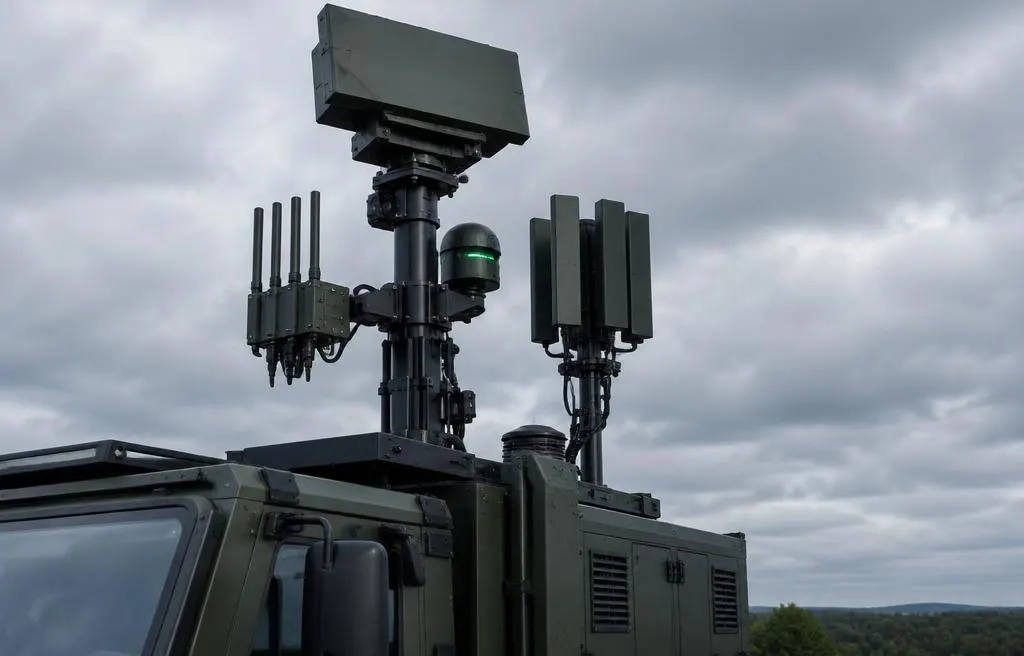
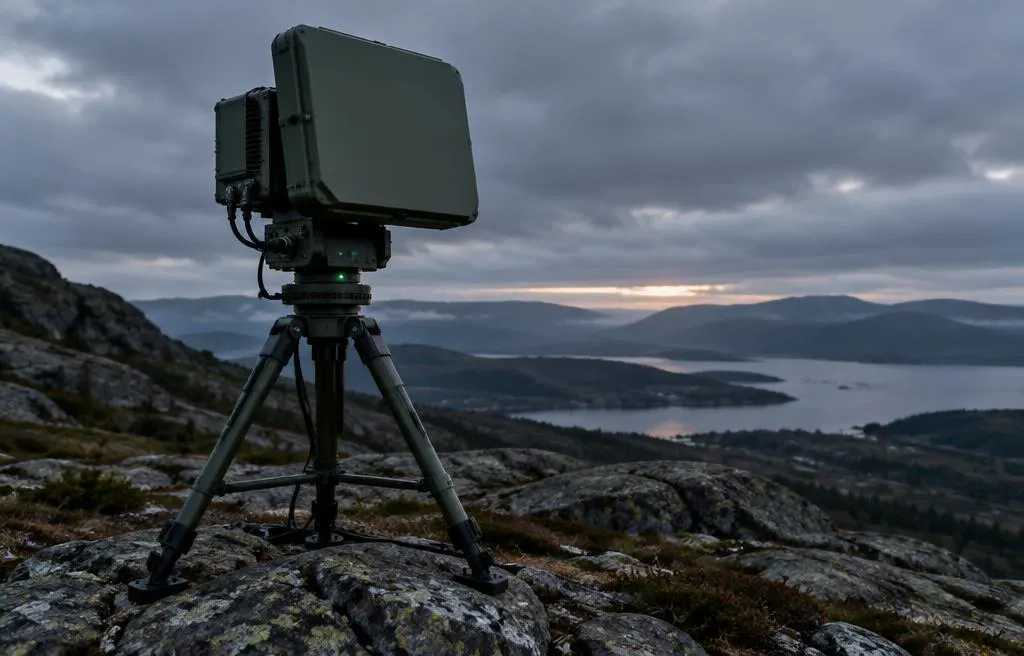
Drone detection radar transmits electromagnetic energy and measures reflections from objects in its coverage. Because it does not depend on the drone’s communications, radar can detect drones that fly pre-programmed routes or operate without a control link, and it provides spatial tracking of position, altitude and movement.
Challenges include the small radar cross-section of many drones, discrimination between drones and birds, ground clutter, buildings and vegetation, line-of-sight constraints and installation demands such as elevated mounting, power and spectrum licensing. Performance depends heavily on the specific radar, its configuration and the site.
Electro-optical and infrared detection
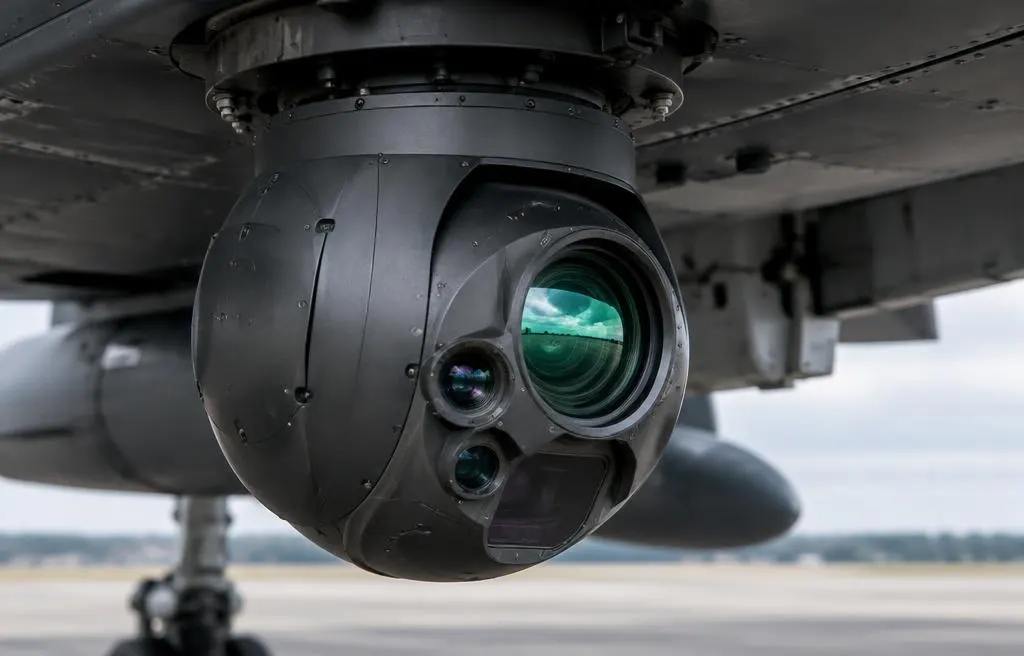
Electro-optical cameras use visible light and infrared cameras detect thermal contrast. They are commonly used to confirm detections cued by other sensors, support tracking and capture imagery for evidence or operator assessment, including payload observation.
Limitations include visibility, darkness for visible cameras, weather such as fog, rain and snow, line of sight, and the difficulty of detecting a small target across a wide field of view. EO/IR is therefore often paired with a wide-area sensor that tells the camera where to look.
Acoustic drone detection
Acoustic sensors listen for the sound signatures of propellers and motors. They are passive and can provide complementary sensing in areas where line of sight is limited.
Background noise from traffic, industry or aircraft, wind and weather, relatively short range and the risk of false classification limit acoustic sensors as standalone solutions. They are typically considered as a supporting layer rather than a primary detection method.
RF vs radar vs optical vs acoustic drone detection
The table summarises the principal trade-offs. It is a qualitative comparison, not a ranking; actual performance depends on the specific product, configuration and environment.
| Technology | Detection method | Main advantage | Key limitation |
|---|---|---|---|
| RF detection | Radio transmissions | Passive; identifies supported signals | May miss non-emitting drones |
| Radar | Reflected signals | Independent of control links | Clutter and small-target challenges |
| EO/IR | Visible and thermal imagery | Visual confirmation | Visibility and line of sight |
| Acoustic | Propulsion sound | Passive complementary sensing | Background noise and range |
Why multi-sensor counter-UAS systems matter
Because each technology has blind spots, many counter-UAS architectures layer several sensors. A typical pattern uses radar to provide wide-area tracks that cue EO/IR cameras for visual confirmation, while RF detection adds contextual information such as the protocol, drone type or controller location where available.
A C2 platform fuses these inputs. When the integration is engineered and validated, correlating detections across sensors can improve confidence and reduce unnecessary alerts. That benefit is not automatic: integration quality, time synchronisation, sensor calibration, track correlation logic and interoperability between vendors all influence the result. A poorly integrated multi-sensor system can generate more operator workload, not less.
Drone detection for critical infrastructure
Requirements differ significantly between sites. The same sensor mix rarely suits an airport, a wind farm and a military base equally well.
Airport drone detection
At airports, aviation safety is the priority. False alarms can disrupt operations, so classification confidence and clear alert procedures matter. Sensors must coexist with airport radars and communications, and any response must be coordinated with air navigation service providers, aviation authorities and law enforcement within the applicable regulatory framework.
Energy and industrial facilities
Power plants, substations, refineries and industrial sites are often extensive, with structures, tanks and terrain that create obstructions. Sensor positioning, coverage of approach routes and integration with existing perimeter security systems are central planning questions.
Military installations
Military sites may face contested electromagnetic environments, require mobile or rapidly deployable configurations, and need secure integration with existing air defence and base security systems. Interoperability with national and allied C2 systems and protection of sensor data are important selection factors.
For the regulatory context of resilience planning at EU critical entities, see our guide to the EU Critical Entities Resilience (CER) Directive.
Seven criteria for selecting a drone detection system
The following criteria help structure evaluation. Above all, insist on site-specific acceptance testing: performance measured at your site, against representative drones, is more informative than advertised maximum ranges.
1. Detection performance and realistic field tests
Ask for results against drone types and flight profiles relevant to your threat scenarios, measured in conditions similar to your site. Laboratory figures and best-case maximum ranges rarely reflect cluttered, real environments.
2. False alarm rate
Frequent false alarms erode operator trust and can disrupt operations. Ask how false alarms were defined and measured, and how birds, vehicles and other aircraft are handled.
3. Coverage and blind spots
Map the coverage of each sensor against terrain, buildings and approach routes. Identify blind spots explicitly and decide whether additional sensors or procedures are needed.
4. Drone classification
Understand what the system can classify, with what confidence, and how classification is presented to operators. Distinguishing a drone from a bird is as important as detecting it.
5. Integrations
Confirm the interfaces to C2, video management and security systems, and whether multi-vendor sensors can be fused. Open, documented interfaces reduce lock-in.
6. Cybersecurity and data governance
Sensors and C2 software are networked systems. Review access control, encryption, patching, logging and where detection data is stored and who can access it.
7. Lifecycle support and training
Detection depends on updated signature libraries and trained operators. Clarify update cycles, support response, spare parts, training and long-term product roadmap.
Questions to ask drone detection suppliers
Use these questions to make supplier discussions comparable and evidence-based:
- Which drone types, models and flight modes (manual, GPS waypoint, autonomous) has the system been tested against, and under what conditions?
- What detection and false alarm results were measured in those tests, and how were they recorded?
- How does the system handle drones that do not emit RF signals?
- Which integration interfaces and data formats are supported for C2 and security platforms?
- How are software, signature and protocol libraries updated, and how often?
- What cybersecurity controls protect the sensors, network and data?
- Can we conduct an operational trial at our site before committing?
Frequently asked questions
What is the difference between drone detection and counter-UAS?
Drone detection covers sensing, classifying, tracking and alerting. Counter-UAS is the broader term that also includes response and mitigation measures. Detection alone does not authorise interference with a drone; mitigation is legally restricted and generally reserved for authorised authorities.
Can RF sensors detect autonomous drones?
Often not reliably. RF detection depends on the drone or controller transmitting. A drone flying a pre-programmed route without an active link may emit little detectable RF energy, although some still transmit telemetry or video. Radar, EO/IR or acoustic sensing can cover this gap.
Can radar detect small drones?
Radars designed for drone detection can detect small drones, but range and reliability depend on the radar, the drone’s size and materials, clutter and line of sight. Discriminating small drones from birds is a key evaluation point, so verify performance at your site.
What is the best drone detection technology for airports?
No single technology is best for every airport. Airports commonly consider layered systems combining radar, RF and EO/IR, chosen to minimise false alarms and avoid interference with aviation systems, and coordinated with aviation authorities.
Why combine RF detection with radar?
They are complementary. Radar can track drones regardless of their communications, while RF can add identification and controller location for supported signals. Fused in a well-integrated C2 system, they can increase confidence in detections.
Conclusion: selecting the right drone detection architecture
There is no universal winner among drone detection technologies. RF, radar, EO/IR and acoustic sensors detect different signatures and complement each other. The right architecture depends on the threat scenarios you need to address, the site, the regulatory context and how the outputs will be used by operators.
Defining measurable operational requirements and validating them through site-specific testing is more important than comparing advertised maximum ranges. A well-integrated, appropriately sized system that has been proven at the site is more valuable than an impressive specification sheet.
Explore DTN’s counter-UAS, military radar and sensors and ISR technology categories, or browse more Technology Insights.
External references
Counter-UAS research
Explore drone detection suppliers
Browse counter-UAS technologies and suppliers on DTN, or join free for newsletters and published research.
Related insights
Technology Guides
How to Protect Critical Infrastructure: Strategies, Technologies and EU Requirements
A practical guide to protecting energy, water, transport and digital infrastructure from physical, cyber and hybrid threats — seven proven methods, key technologies and how the EU CER and NIS2 directives fit together.
Standards & Compliance
CER Directive: EU Requirements, Deadlines and Security Technologies Explained (2026)
What the Critical Entities Resilience Directive requires, the key dates for Member States and critical entities, and how operators can map resilience duties to security technologies.