Standards & Compliance
CER Directive: EU Requirements, Deadlines and Security Technologies Explained (2026)
What the Critical Entities Resilience Directive requires, the key dates for Member States and critical entities, and how operators can map resilience duties to security technologies.
· 12 min read · DTN Editorial
What is the CER Directive?
The CER Directive — formally the Critical Entities Resilience Directive, Directive (EU) 2022/2557 — is EU law that requires Member States to identify critical entities in 11 sectors and requires those entities to assess risks and take proportionate measures to prevent, withstand and recover from disruptive incidents. It covers all hazards, from natural disasters to sabotage, and replaced the 2008 European Critical Infrastructure Directive.
The earlier 2008 regime focused on a narrow set of European critical infrastructure assets in energy and transport. The CER Directive shifts the focus from protecting assets to keeping essential services running, and it widens the sector coverage considerably. It was adopted on 14 December 2022, entered into force on 16 January 2023 and repealed Directive 2008/114/EC with effect from 18 October 2024.
For infrastructure operators, the practical message is that resilience becomes a documented, auditable obligation once an entity is identified as critical (for practical methods, see our guide on how to protect critical infrastructure). For security technology suppliers, it means buyers will increasingly ask how a product supports a risk assessment and a resilience plan — not just what it does in isolation.
The 11 sectors and who is in scope
The Annex to the directive lists the sectors, subsectors and categories of entities from which critical entities can be identified:
- Energy — electricity, district heating and cooling, oil, gas and hydrogen.
- Transport — air, rail, water and road transport, including infrastructure managers and operators.
- Banking — credit institutions.
- Financial market infrastructure — operators of trading venues and central counterparties.
- Health — healthcare providers, EU reference laboratories, and manufacturers and distributors of certain medicinal products and devices.
- Drinking water — suppliers and distributors of water intended for human consumption.
- Wastewater — undertakings collecting, disposing of or treating urban, domestic and industrial wastewater.
- Digital infrastructure — such as internet exchange points, DNS service providers, cloud and data centre service providers and electronic communications providers.
- Public administration — public administration entities of central government, as defined by Member States under national law.
- Space — operators of ground-based infrastructure supporting space-based services.
- Production, processing and distribution of food — food businesses engaged exclusively in logistics and wholesale distribution and large-scale industrial production and processing.
Sector membership is not the same as being in scope
Belonging to one of these sectors does not by itself make an organisation subject to the entity obligations. Each Member State runs its own risk assessment and then identifies critical entities using the criteria in Article 7: the entity provides one or more essential services, operates infrastructure on that Member State's territory, and an incident would have significant disruptive effects. The list of essential services is set out in Commission Delegated Regulation (EU) 2023/2450.
Exemptions and sector-specific rules
Article 8 provides that critical entities in banking, financial market infrastructure and digital infrastructure are not subject to the main entity resilience obligations of the CER Directive, because those areas are addressed by other EU instruments, notably DORA and NIS2. In addition, Member States may decide that certain obligations do not apply to entities operating in national security, public security, defence or law enforcement, and the directive does not apply to public administration entities carrying out activities in those areas. Because transposition differs, the national implementing law is always the decisive text.
Key deadlines
The directive sets a staged timeline. The first milestones are obligations on Member States; entity obligations follow only after an individual notification. Confusing identification (a Member State decision) with notification (informing the entity) is a common source of error.
- 17 October 2024: transposition deadline under Article 26; national measures apply from 18 October 2024. Not every Member State transposed on time, and the European Commission opened infringement procedures in late 2024 against a number of Member States.
- 17 January 2026: Member States adopt a national strategy for enhancing resilience (Article 4) and carry out their first Member State risk assessment (Article 5).
- 17 July 2026: Member States identify critical entities (Article 6(1)).
- Within one month of identification: each critical entity is notified of its status and obligations (Article 6(3)).
- Within nine months of notification: the critical entity carries out its own risk assessment (Article 12).
- Ten months after notification: under Article 6(3), Chapter III — including the resilience measures of Article 13 and incident notification under Article 15 — applies to the entity.
Figure 1 · CER timeline
16 Jan 2023
Directive enters into force
EU
17 Oct 2024
Transposition deadline; national rules apply from 18 Oct 2024
Member States
17 Jan 2026
National strategy and first Member State risk assessment
Member States
17 Jul 2026
Identification of critical entities
Member States
+1 month
Notification to each identified entity
Member States
+9 months
Entity risk assessment (Art. 12), counted from notification
Critical entities
+10 months
Resilience measures (Art. 13) and other Chapter III duties apply
Critical entities

In other words, there is no single EU-wide date on which "everyone must comply". An entity notified in August 2026 would face a different date than one notified earlier under a faster national process.
What critical entities must do
1. Carry out an entity risk assessment
Article 12 requires critical entities to assess all relevant risks that could disrupt their essential services, taking into account the Member State risk assessment and other sources. The assessment must cover natural and man-made risks, including accidents, natural disasters, public health emergencies, hybrid threats and antagonistic threats such as terrorism. It must be repeated as necessary and at least every four years.
2. Take proportionate resilience measures
Article 13 requires appropriate and proportionate technical, security and organisational measures, based on the risk assessments, to:
- prevent incidents, with due consideration of disaster risk reduction and climate adaptation measures;
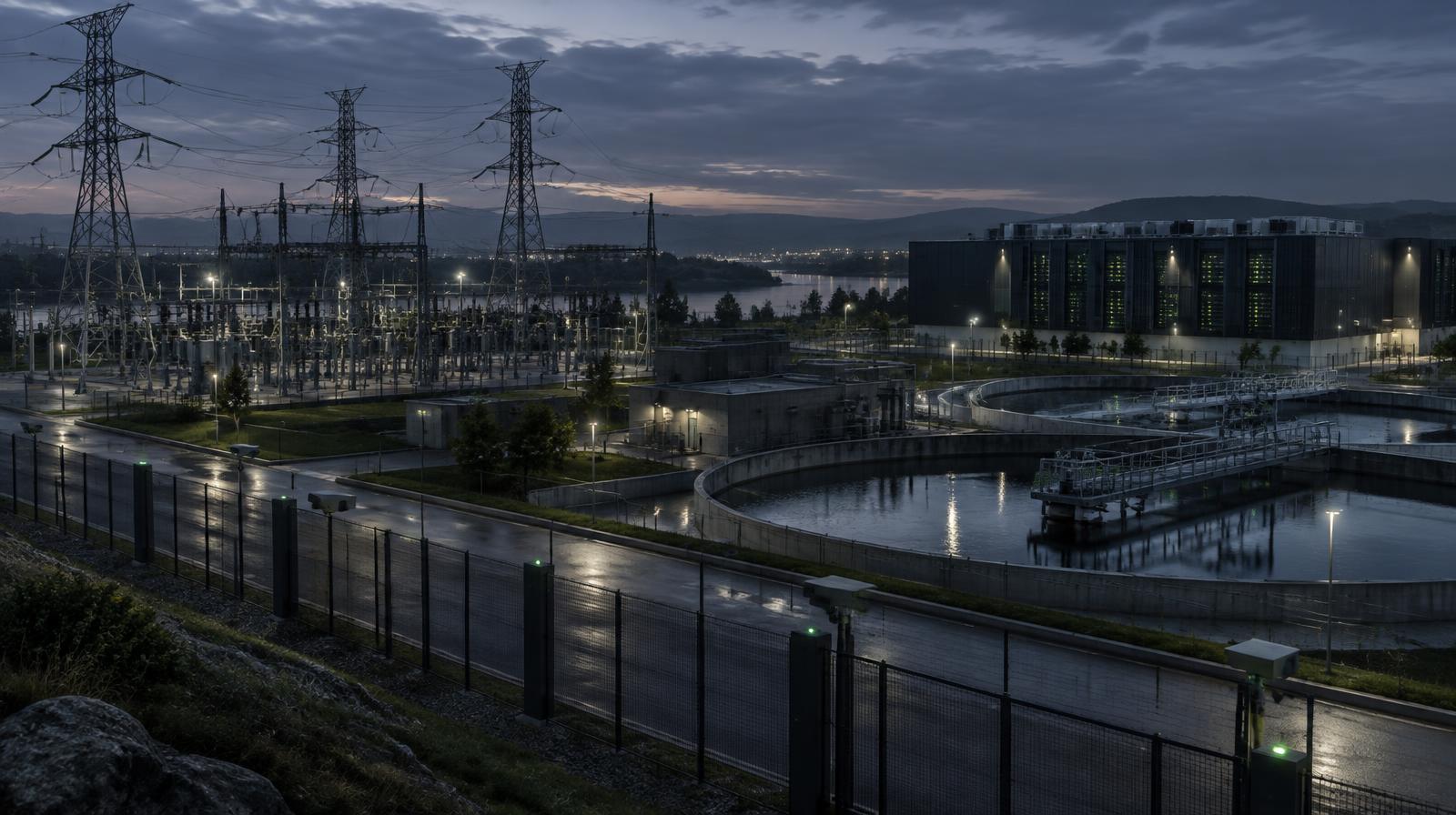
- ensure adequate physical protection of premises and critical infrastructure, taking due account of, for example, fencing, barriers, perimeter surveillance tools and routines, detection equipment and access controls;
- respond to, resist and mitigate the consequences of incidents, including risk and crisis management procedures and alert routines;
- recover from incidents, taking due account of business continuity measures and the identification of alternative supply chains;
- ensure adequate employee security management, including categories of personnel exercising critical functions, access rights and, where applicable, background checks under Article 14;
- raise awareness among relevant personnel through training, information material and exercises.
Entities must describe these measures in a resilience plan or equivalent document and designate a liaison officer or equivalent as a point of contact with the competent authorities.
3. Notify significant incidents
Under Article 15, entities notify the competent authority without undue delay of incidents that significantly disrupt, or could significantly disrupt, the provision of essential services. An initial notification is due no later than 24 hours after becoming aware of the incident, followed where relevant by a detailed report within one month.
4. Business continuity and supply chain
The directive is explicit that recovery includes business continuity planning and alternative supply chains. In practice, this pushes operators to look at single-source dependencies: spare parts, fuel, critical control system components and the maintenance contracts that keep protective systems running.
5. Supervision and particular European significance
Competent authorities can inspect entities, verify resilience measures and impose penalties set under national law. Entities that provide essential services to or in six or more Member States can be designated as critical entities of particular European significance, which may trigger Commission-organised advisory missions under Articles 17 and 18.
CER vs NIS2: complementary, not interchangeable
CER was adopted alongside the NIS2 Directive (EU) 2022/2555, and the two are designed to work together. The key differences:
- Focus: CER addresses the overall resilience of entities against all hazards, with a strong physical dimension; NIS2 addresses cybersecurity risk management for network and information systems.
- Scope mechanism: CER applies to entities individually identified by Member States; NIS2 largely applies by size thresholds and sector, with "essential" and "important" entity categories.
- Overlap: NIS2 applies to entities identified as critical under CER regardless of their size, and the directives require competent authorities to cooperate and exchange information.
- Incident reporting: both include an initial 24-hour notification, but under different articles, authorities and thresholds.
A practical consequence: a water utility identified under CER will usually need a single risk picture in which physical security, OT cybersecurity, power resilience and crisis communications are assessed together — even if two regulators review the results.
Mapping threats to possible technologies
Nothing in the CER Directive requires an operator to buy a particular product. Technology becomes relevant only when a risk assessment shows a gap that a technical measure can close proportionately. The matrix below shows typical pairings that operators and suppliers discuss — as starting points, not prescriptions.
Figure 2 · Threat-to-technology matrix
| Threat / hazard | Related duty | Possible technology options |
|---|---|---|
| Intrusion, sabotage, theft | Art. 13(1)(b) physical protection | Perimeter intrusion detection, video analytics, access control |
| Loss of grid power | Art. 13(1)(c)–(d) mitigate & recover | UPS, generators, battery storage, power management |
| Communications failure | Art. 13(1)(c) crisis & alert routines | Resilient / redundant radio, SATCOM backup, secure messaging |
| Heat, dust, equipment overheating | Art. 13(1)(a) prevent; climate adaptation | Industrial and ruggedised HVAC, environmental monitoring |
| Cyber attack on OT systems | NIS2 Art. 21 (CER: all-hazards context) | OT network monitoring, segmentation, secure remote access |
| Unauthorised drone overflight | Art. 13(1)(b) detection, where lawful | RF / radar / EO drone detection; mitigation only by authorised bodies |

Perimeter and site protection
Fence-mounted or buried intrusion sensors, thermal cameras and video analytics are the most direct technical response to the physical-protection examples in Article 13. Their value depends on integration with alarm handling and response routines. See DTN's Sensors & ISR category for related sensing technologies.
Secure and resilient communications
Crisis management and alert routines fail if communications fail. Operators often assess redundant radio networks, satellite backup and secure messaging for control rooms and field teams. Browse communications technologies.
Backup power and energy resilience
Uninterruptible power supplies, generators and battery systems underpin almost every other measure — sensors, cameras and control systems all need power during a grid outage. Fuel logistics belong in the supply chain analysis. See power and energy systems.
Industrial HVAC and environmental control
Rising temperatures and climate-related events make cooling of control rooms, shelters, data rooms and electrical equipment a resilience question, linking directly to the directive's reference to climate adaptation. Ruggedised HVAC and environmental monitoring are covered under Military HVAC.
OT cybersecurity
Cybersecurity is governed mainly by NIS2, but an all-hazards CER assessment should still record cyber-physical dependencies: a compromised control system can cause physical harm. Network segmentation, OT monitoring and secure remote access are typical controls.
Drone detection — where appropriate and lawful
Unauthorised drone flights near energy, transport and port sites have become a recognised concern. Passive detection (RF, radar, electro-optical) may support situational awareness, but jamming, spoofing or physical mitigation is generally restricted by national aviation and telecommunications law and often reserved for authorised state bodies. Read our counter-UAS overview and the Counter-UAS category.
Procurement checklist for CER-driven projects
Whether you are an operator buying or a supplier bidding, these questions help connect a purchase to actual obligations:
- Confirm status. Has the entity been notified as critical under national law, and from which date do Chapter III obligations apply?
- Trace to risk. Which risk in the entity risk assessment does the measure address, and why is it proportionate?
- Map to Article 13. Which objective — prevent, protect, respond, recover, personnel, awareness — does it support? Record it in the resilience plan.
- Check NIS2 interfaces. Does the system introduce network-connected components that must meet NIS2 cybersecurity and supply chain requirements?
- Assess supply chain resilience. Origin of critical components, spare parts availability, lead times and alternative sources.
- Plan for power and environment. Will the system keep working during outages and temperature extremes?
- Integrate with response. Who receives alarms, and how do they feed incident notification within 24 hours?
- Verify legality. Especially for drone detection, video surveillance and background checks — confirm data protection and sector rules.
- Demand evidence. Test reports, standards conformity and references relevant to the environment — not generic "CER compliant" labels, which have no official meaning.
- Budget for the life cycle. Maintenance, updates and exercises keep a measure effective over the four-year review cycle.
Frequently asked questions
What is the CER Directive?
Directive (EU) 2022/2557 on the resilience of critical entities. It requires Member States to identify critical entities in 11 sectors and requires those entities to assess risks, take proportionate resilience measures and report significant disruptive incidents.
When do critical entities have to comply?
It depends on notification. Member States had to identify critical entities by 17 July 2026 and notify them within one month of identification. Entity risk assessments are due within nine months of notification, and Article 6(3) applies the Chapter III resilience obligations, including Article 13, ten months after notification.
Is every company in the 11 sectors covered?
No. Only entities identified as critical by a Member State under the national transposition fall under the entity obligations. Identification is based on a national risk assessment and criteria in Article 7, not on sector membership alone.
What is the difference between CER and NIS2?
CER covers the resilience of critical entities against all hazards, with a strong physical dimension. NIS2 covers cybersecurity of network and information systems. The two are linked: entities identified as critical under CER also fall within NIS2 scope.
Does the CER Directive require specific security products?
No. Article 13 requires appropriate and proportionate technical, security and organisational measures based on risk. It mentions examples such as fencing, barriers, perimeter surveillance, detection equipment and access controls, but it does not mandate any product or brand.
How quickly must incidents be reported under CER?
Article 15 requires critical entities to notify the competent authority without undue delay of incidents that significantly disrupt essential services, with an initial notification no later than 24 hours after becoming aware, followed where relevant by a detailed report within one month.
Sources and further reading
- Directive (EU) 2022/2557 on the resilience of critical entities — Official Journal of the EU, L 333, 27 December 2022 (EUR-Lex, accessed 6 November 2026).
- Directive (EU) 2022/2555 (NIS2) — Official Journal of the EU, L 333, 27 December 2022 (EUR-Lex, accessed 6 November 2026).
- Commission Delegated Regulation (EU) 2023/2450 of 25 July 2023, establishing a list of essential services — available on EUR-Lex.
- Ramboll: "The EU CER Directive – understand the basics" — third-party introduction (accessed 6 November 2026).
This article is general information, not legal advice. Obligations depend on national transposition and on decisions by competent authorities.
Explore the network
Researching resilience technologies?
Browse DTN technology categories, or enquire about presenting your security and resilience technology to European operators.
Related articles
Buyer Guides
Unmanned Ground Vehicle Manufacturers: European UGV Companies and Technologies
Compare Milrem Robotics, Rheinmetall and KNDS by application, integration, oversight and lifecycle evidence—and request confidential, manually researched supplier matching.
AI & Data
Military Software Development in the AI Era: Architecture Matters More Than Code
Why AI-assisted engineering, modular architecture and private AI matter for the enterprise software defence manufacturers rely on—and why human review still decides quality.