AI & Data
Military Software Development in the AI Era: Architecture Matters More Than Code
Why AI-assisted engineering, modular architecture and private AI matter for the enterprise software defence manufacturers rely on—and why human review still decides quality.
· 8 min read · DTN Editorial
Enterprise software architecture for defence manufacturers
Original generated file not yet supplied.
The future of military software development is not about writing more code. It is about designing software that can evolve. AI tools now draft code, tests and documentation in minutes. That makes code cheaper to produce, but it does not make software cheaper to own. What determines long-term cost is whether the system can absorb new regulations, new products and new ways of working without being rebuilt.
For defence manufacturers, this is a practical business question. Their competitive position depends on documentation, engineering knowledge and production administration as much as on the products they build. The software that runs those functions must be dependable, auditable and able to change.
What this article covers—and what it does not
This article is about enterprise software inside defence companies: compliance documentation, engineering knowledge management, manufacturing administration, software quality assurance, internal private AI for document search and modernisation of legacy business applications.
It does not cover battlefield software, weapons, targeting, military operational systems or integrations with them. Those domains have their own requirements, authorities and approval processes, and they are outside the scope of this discussion.
What AI-assisted engineering actually changes
AI-assisted coding tools can generate boilerplate, suggest implementations, write unit tests, summarise unfamiliar code and propose refactoring. Used well, they shorten the path from an idea to a working prototype. A team can show a business user something concrete sooner, and learn earlier whether the idea is right.
Documentation benefits too. AI can draft explanations of modules, data flows and interfaces that engineers then correct. For organisations that struggle to keep documentation current, that is a real improvement—provided someone accountable checks it.
The change is in speed of drafting, not in responsibility. The questions that matter—what should be built, how it fits the business, what could go wrong—still require experienced people.
Why human review, security assessment and verification remain necessary
AI-generated code can look correct and still be wrong. It may use outdated libraries, mishandle edge cases, introduce security weaknesses or quietly duplicate logic that already exists elsewhere. It may also reproduce patterns that do not suit the company's architecture. Speed without review simply moves problems into production faster.
Three disciplines remain essential. Code review by people who understand the system. Security assessment of dependencies, access control and data handling. Verification that the software does what the business requirement says, demonstrated by tests and evidence rather than assumed. The NIST Secure Software Development Framework is one public reference for structuring secure development practices; it is a framework to adapt, not a certificate.
Where AI is part of the delivered system, for example in document search, the NIST AI Risk Management Framework offers voluntary guidance for identifying and managing AI-specific risks across its lifecycle.
Architecture matters more than code volume
Experienced architects translate business needs into a structure: which modules exist, what each is responsible for, how data moves between them and who owns each part. Good architecture makes the important things easy to change and the dangerous things hard to break.
Requirements change constantly. Export rules, quality standards, customer reporting formats and internal processes all evolve. A modular enterprise application lets a company replace a reporting module, add a new approval step or connect a new data source without touching everything else. A tightly coupled system turns each small change into a project.
This is why the commercial value lies in solving business problems through software, not in selling developer hours. Hours measure effort. Architecture determines whether that effort keeps paying off.
Business application examples for defence manufacturers
The table shows typical non-operational applications and what good architecture contributes. They are illustrative categories, not references to completed DTN projects.
| Area | What it does | What architecture should ensure |
|---|---|---|
| Compliance documentation | Structured records of requirements, evidence and approvals instead of scattered spreadsheets | Traceable version history and clear ownership of each document |
| Engineering knowledge management | One searchable place for design decisions, lessons learned and technical notes | Access rights that match who may see which project information |
| Manufacturing administration | Work orders, material status and capacity planning in one business application | Integration with existing ERP data without duplicating the source of truth |
| Software quality assurance | Automated tests, review workflows and release records | Evidence that a change was reviewed and tested before release |
| Internal private AI document search | Employees ask questions of approved internal documents in plain language | Answers cite their source; data stays in a controlled environment |
| Legacy application modernisation | Gradual replacement of an ageing business system, module by module | Business keeps running while parts move to a maintainable structure |
Private and sovereign AI for controlled corporate information
Many defence manufacturers hold information they cannot send to arbitrary external services: design documentation, supplier contracts, quality records and export-related material. Private AI means running AI capabilities in an environment the company controls. Sovereign AI adds the question of jurisdiction: under which country's laws the data and processing fall, and who could be compelled to provide access.
At a conceptual level, the architecture questions are straightforward. Where is the data stored? Who can query it? Which model processes it, and where does that model run? Are answers traceable to their source documents? Can access be revoked? DTN's guide to air-gapped AI describes how private AI can run without cloud connectivity and the trade-offs that brings.
Private deployment is a design choice, not a guarantee. It still needs security assessment, access control and someone accountable for how the system is used.
Realistic timelines—without guarantees
AI-assisted development shortens some phases, but timelines still depend on scope, data quality, integrations, security review and how quickly decisions are made. As indicative ranges only:
- Clickable prototype or proof of concept: often a few weeks to around two months.
- Focused internal business application (for example a document workflow or search tool): often three to six months to a first production release.
- Modernising a larger legacy business system: typically a staged programme over many months, delivered module by module.
These are general planning ranges, not commitments. A credible architect will refine them only after understanding the requirements, the existing systems and the review obligations.
How to choose a software architect
The person who shapes the architecture has more influence on lifetime cost than any single developer. When evaluating candidates or partners, look for evidence in four areas:
- Experience: have they designed and maintained business systems of similar complexity, and can they explain what went wrong as well as what went right?
- Maintainability: do they talk about modules, boundaries, testing and documentation—or only about features and speed?
- Governance: how do they handle code review, security assessment, access control and the use of AI tools in development?
- Lifecycle ownership: who will maintain the system after launch, how will changes be managed, and how is knowledge transferred to your team?
Ask for concrete examples you can verify. Be cautious of anyone who promises a fixed outcome before understanding your requirements.
Have a software development challenge?
Tell us what you need to achieve. Defence Technology Network helps identify suitable software architecture and development expertise for your business requirements. Contact Defence Technology Network through our contact form.
Please do not submit classified, export-controlled or otherwise sensitive information through the form. A short description of the business problem is enough to start the conversation.
Frequently asked questions
What does military software development mean in this article?
Here it means enterprise software used by defence manufacturers to run their business: compliance documentation, engineering knowledge management, manufacturing administration, quality assurance, internal document search and modernisation of legacy business applications. It excludes battlefield, weapons, targeting and operational military systems.
Can AI write production software on its own?
No. AI-assisted tools can speed up drafting code, tests, documentation and refactoring, but their output can be wrong, insecure or poorly structured. Experienced people must review it, assess security and verify that the software meets the actual requirement.
Why does architecture matter more than code?
Regulations, products and business processes change. A modular architecture with clear boundaries lets a company change one part without rebuilding everything. Fast code without that structure often becomes expensive to maintain.
What is private or sovereign AI for a defence company?
It means running AI capabilities, such as document search, in an environment where the company controls its data, who can access it and which jurisdiction it falls under. It is an architectural and governance choice, not a product label, and it does not remove the need for security assessment.
How long does a business application take to build?
It depends on scope, data, integrations and review requirements. As an indicative range only, a focused prototype may take weeks to a few months, and a production business application several months. These are not guarantees.
Sources and further reading
Software development challenges
Have a software development challenge?
Tell us what you need to achieve. Defence Technology Network helps identify suitable software architecture and development expertise for your business requirements.
Related insights
AI & Data
Air-Gapped AI: How Private AI Systems Work Without Cloud Connectivity
How private AI deployment works in isolated networks: architecture, model updates, security controls and the real trade-offs of offline AI systems.
Standards & Compliance
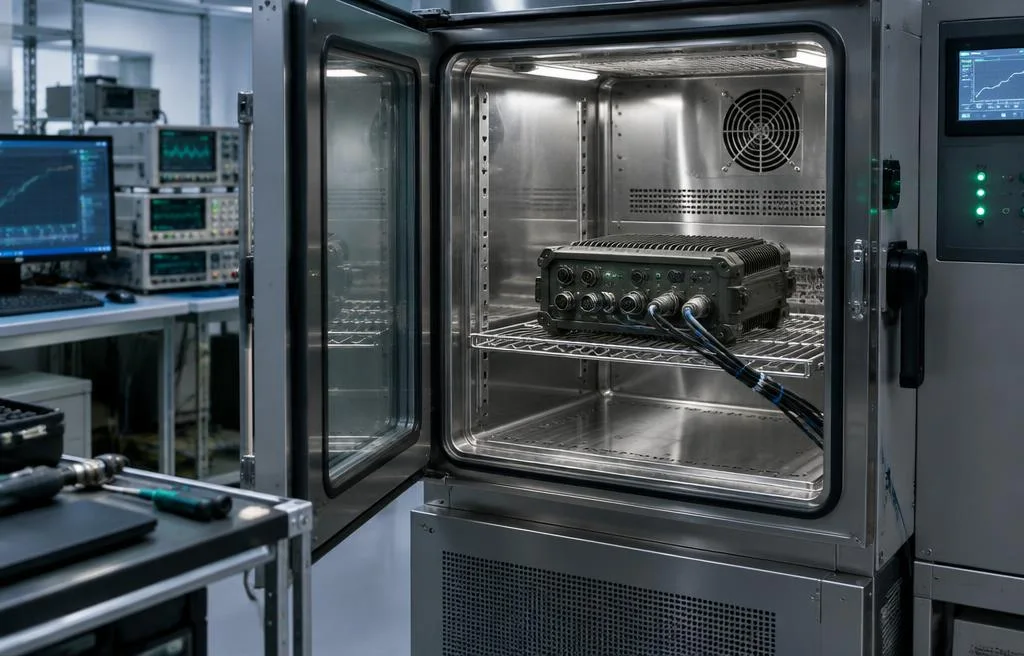
Military Equipment Testing: Standards, Environmental Tests and How to Choose a Laboratory
An engineering guide to tailored environmental testing, MIL-STD-810H, NATO standards and the evidence buyers need when selecting equipment and laboratories.

Procurement & Market
Defence Tenders: Procurement Opportunities in Europe and NATO
A curated roundup of current defence tenders, NATO procurement and early market engagement in Europe, with source links, deadlines and the supplier roles each opportunity may suit.