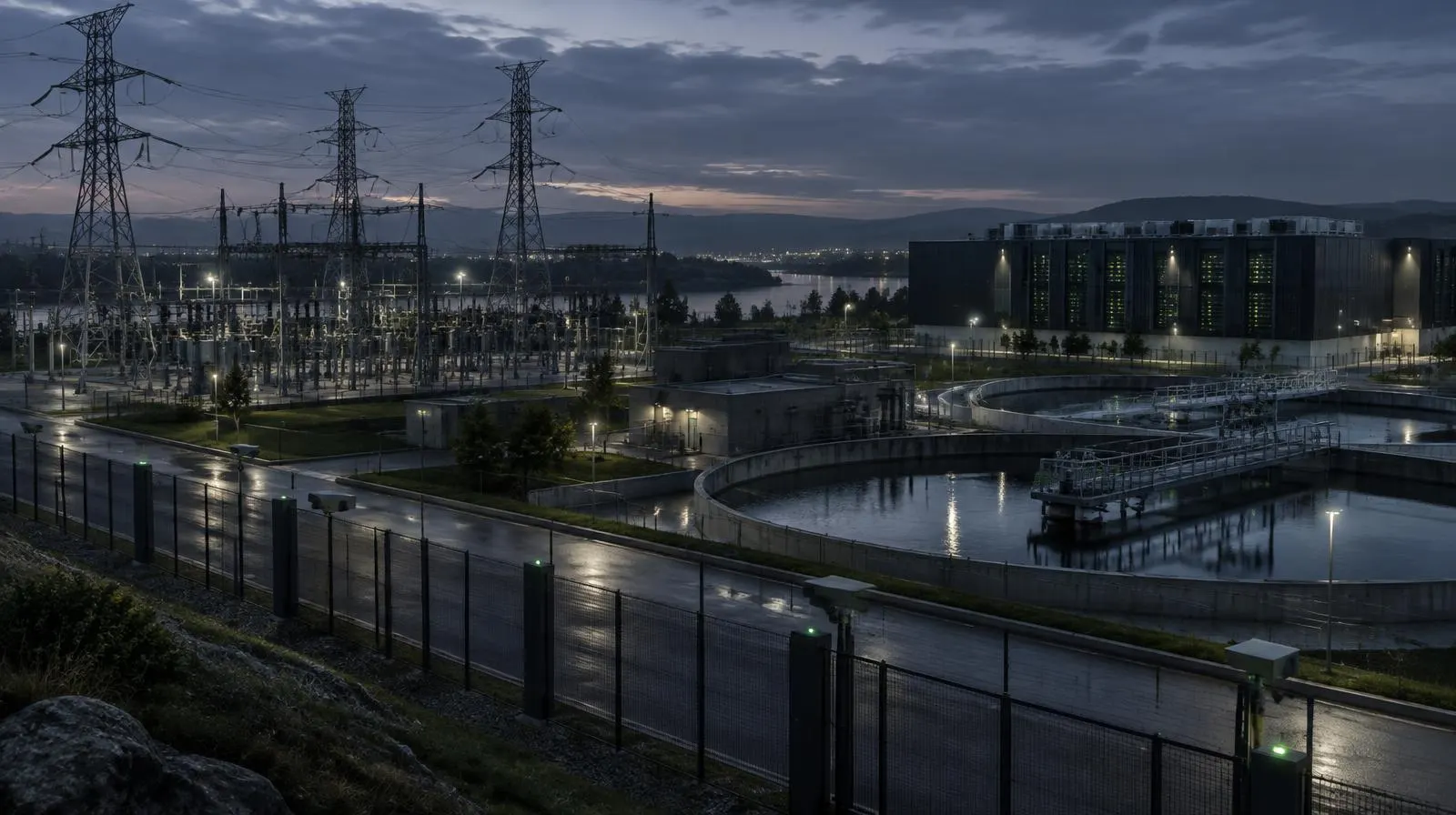
Technology Guides
How to Protect Critical Infrastructure: Strategies, Technologies and EU Requirements
A practical guide to protecting energy, water, transport and digital infrastructure from physical, cyber and hybrid threats — seven proven methods, key technologies and how the EU CER and NIS2 directives fit together.
· 9 min read · DTN Editorial
To protect critical infrastructure, operators combine a clear risk picture with layered physical security, segmented and monitored networks, redundant power and communications, and well-rehearsed response plans — coordinated with authorities and suppliers. No single product delivers resilience; it comes from measures that reinforce each other across physical, cyber and organisational domains.
This guide explains how to protect critical infrastructure in practice: what counts as critical, which threats matter most today, seven proven methods, the technologies that support them, and how European rules frame the work.
What is critical infrastructure?
Critical infrastructure means the assets, systems and networks that provide services a society cannot function without. If they fail, the effects reach public safety, health, the economy or government functions — often far beyond the site where the incident happens.
In Europe, the sectors most commonly discussed include:
- Energy — electricity generation and grids, gas, oil, hydrogen, district heating.
- Transport — rail, aviation, ports, maritime and road infrastructure.
- Water — drinking water supply and wastewater treatment.
- Health — hospitals, laboratories and medical supply chains.
- Digital infrastructure — data centres, cloud services, internet exchanges and telecommunications.
- Banking and financial market infrastructure, public administration, space ground infrastructure and food production and distribution.
Interdependencies are what make these sectors critical as a system. Water treatment needs electricity; the grid needs communications; communications need power and cooling. A protection strategy has to account for these chains, not just the fence line of one site.
Physical, cyber and hybrid threats
The threat landscape for critical infrastructure spans deliberate attacks, accidents and natural hazards. The distinction between categories is increasingly blurred, which is why European policy speaks of an all-hazards approach.
| Threat type | Examples | Protection focus |
|---|---|---|
| Physical | Intrusion, sabotage, theft of copper or components, vehicle attacks, drone overflights | Perimeter, access control, detection and guard response |
| Cyber | Ransomware, compromised remote access, malware in OT networks, supply-chain compromise | Segmentation, monitoring, identity, backups and patching |
| Hybrid | Coordinated sabotage with disinformation, cable or pipeline damage, reconnaissance by drones combined with cyber probing | Shared intelligence, cross-domain risk picture, joint exercises |
| Natural & technical | Storms, floods, heatwaves, grid failure, equipment faults | Redundancy, environmental control, continuity planning |
Physical threats
Remote and distributed assets — substations, pumping stations, rail signalling, telecom masts — are hard to guard continuously. Intrusion, vandalism and theft remain common, while deliberate sabotage and unauthorised drone flights near energy and port sites have become a recognised concern across Europe.
Cyber threats
Operational technology (OT) such as SCADA systems, PLCs and industrial controllers was often designed for reliability, not security. As these systems connect to business networks and remote maintenance, ransomware and intrusions that start in IT can reach processes that move water, power or trains.
Hybrid threats
Hybrid activity combines methods — for example physical damage to undersea cables or pipelines, cyber probing and disinformation — to create disruption below the threshold of open conflict. Defending against it depends on sharing information between operators, authorities and security services, and on treating physical and cyber signals as one picture.
Seven methods to protect critical infrastructure
The following methods to protect critical infrastructure form a cycle. Each one feeds the next, and the cycle repeats as threats and assets change.
1. Risk assessment
Identify essential services, the assets that deliver them and the dependencies between them. Assess plausible threats and hazards, their likelihood and the impact of disruption. A good assessment prioritises: it tells you where a euro of investment reduces the most risk, and it documents why chosen measures are proportionate.
2. Layered physical security
Apply defence in depth: deter, detect, delay and respond. Fencing and barriers delay; intrusion detection, cameras and access control detect and verify; lighting and signage deter. Detection is only useful when it triggers a timely, practised response, so alarm handling and guard or police response times belong in the design.
3. OT/IT network segmentation
To protect critical infrastructure networks, separate control systems from business IT and the internet. Use zones and conduits — for example following the IEC 62443 model — with firewalls or data diodes at boundaries, and allow only the traffic each process genuinely needs. Segmentation limits how far an intrusion can spread and buys time for response.
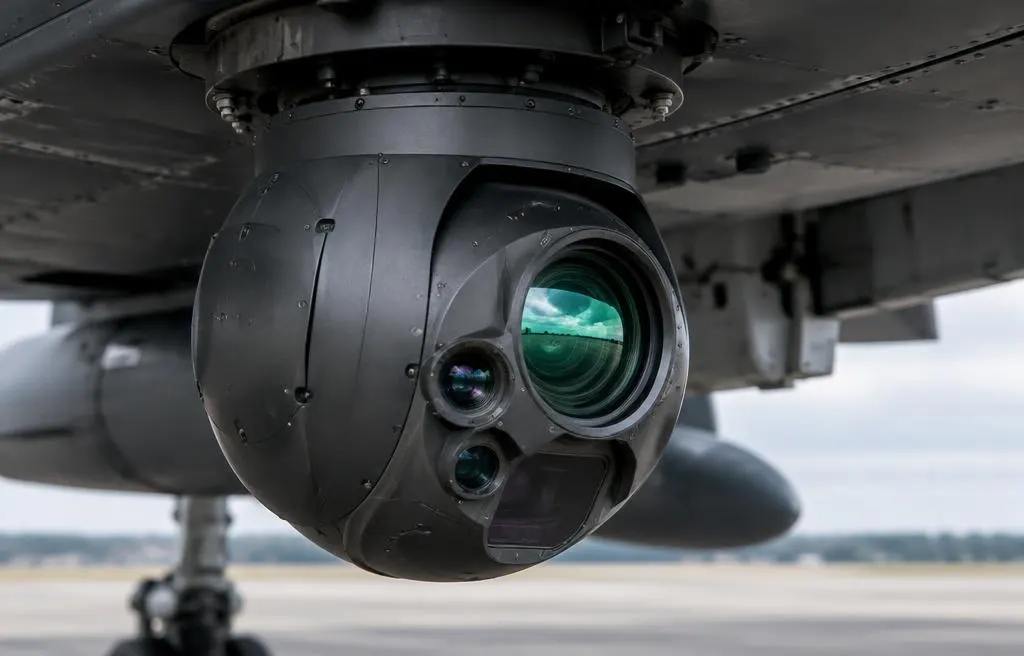
4. Continuous monitoring
Combine physical monitoring (sensors, video, environmental alarms) with network monitoring of IT and OT traffic. Passive OT monitoring can detect unknown devices, unusual commands or new connections without interfering with processes. Centralising alerts in a security operations or control centre helps correlate events across domains.
5. Redundancy and resilience
Assume that something will fail. Backup power (UPS, generators, battery storage), redundant communication paths, spare critical components and alternative suppliers keep essential services running. Environmental control for control rooms and equipment shelters protects electronics during heatwaves and extreme weather.
6. Response drills and exercises
Plans that have never been exercised rarely work as written. Run tabletop exercises for cyber and hybrid scenarios, practical drills for site incidents, and recovery tests for backups. Include operations staff, IT, security, communications and — where relevant — external responders.
7. Collaboration and information sharing
No operator sees the whole threat picture. Work with national competent authorities and CSIRTs, sector information-sharing groups, neighbouring operators and suppliers. Clear contracts with technology and maintenance providers — covering security updates, spare parts and incident support — are part of resilience.
Key technologies for critical infrastructure protection
Technology supports the methods above; it does not replace them. The most valuable systems are those that integrate with alarm handling, operations and maintenance routines.
Sensors and intrusion detection
Fence-mounted, buried and fibre-optic intrusion sensors, radar and lidar cover long perimeters and remote sites. RF, radar and electro-optical drone detection can support situational awareness; mitigation such as jamming is generally restricted by national law and often reserved for authorised authorities. See DTN's Sensors & ISR and Counter-UAS categories.
Thermal imaging
Thermal cameras detect people and vehicles by heat signature in darkness, smoke or light fog, making them well suited to perimeters. Radiometric thermal imaging also supports condition monitoring — spotting overheating transformers, cables or bearings before they fail.
Secure and resilient communications
Crisis management depends on communications that keep working when public networks are congested or down. Operators assess dedicated radio networks, satellite backup and encrypted messaging for control rooms and field teams. Browse communications technologies.

OT cybersecurity
Industrial firewalls and data diodes, OT asset inventory and network detection tools, secure remote access gateways and hardened engineering workstations address the specific constraints of control systems, where downtime for patching is limited and legacy devices are common.
AI-assisted analytics
Machine-learning video analytics can reduce false alarms by classifying people, vehicles and animals, and anomaly detection can flag unusual network or process behaviour. These tools work best as decision support for trained operators, with clear rules on data protection and human oversight.
Backup power is equally foundational — sensors, cameras and controllers all need electricity during an outage. See power and energy systems.
EU requirements: the CER Directive and NIS2
Two EU directives, both adopted in December 2022, shape how operators in Europe protect critical infrastructure. They are complementary, not interchangeable.
CER Directive — resilience of critical entities
The Critical Entities Resilience (CER) Directive (EU) 2022/2557 requires Member States to identify critical entities in 11 sectors. Identified entities must carry out risk assessments, take proportionate technical, security and organisational measures to prevent, protect against, respond to and recover from incidents, and notify significant disruptions. Its scope is all hazards, with a strong physical-security dimension. For deadlines, sectors and obligations in detail, read our guide EU CER Directive: Requirements and Implications for Critical Infrastructure.
NIS2 Directive — cybersecurity of network and information systems
The NIS2 Directive (EU) 2022/2555 sets cybersecurity risk-management and incident-reporting obligations for "essential" and "important" entities across a broad range of sectors, largely determined by sector and size. Measures cover areas such as risk analysis, incident handling, business continuity, supply-chain security, access control and encryption, with management bodies accountable for oversight.
How they fit together
- Focus: CER addresses overall, all-hazards resilience; NIS2 addresses cybersecurity.
- Scope: CER applies to entities individually identified by Member States; NIS2 applies mainly by sector and size thresholds.
- Overlap: entities identified as critical under CER also fall within NIS2, regardless of size.
- Products: neither directive mandates specific products; measures must be appropriate and proportionate to assessed risk.
In practice, a single risk picture that covers physical security, OT cybersecurity, power and communications makes both sets of obligations easier to meet. National transposition laws are always the decisive text.
How to protect critical infrastructure from cyber attack: a checklist
- Inventory assets. Maintain an up-to-date list of IT and OT devices, software versions and network connections.
- Segment networks. Separate OT from IT and the internet; restrict traffic between zones to what processes require.
- Control remote access. Use multi-factor authentication, time-limited vendor access and logged sessions through a secure gateway.
- Monitor OT traffic. Detect new devices, unusual commands and unexpected connections.
- Manage vulnerabilities. Patch where possible; where not, apply compensating controls and document the risk.
- Harden endpoints. Lock down engineering workstations and HMIs; disable unused services and ports.
- Back up and test recovery. Keep offline copies of configurations and controller logic, and rehearse restoration.
- Secure the supply chain. Set security requirements in contracts and verify supplier update and incident processes.
- Train people. Phishing awareness for office staff, and incident recognition for operators.
- Prepare to report. Know which authority to notify, the timelines and who decides.
Frequently asked questions
What is critical infrastructure?
Critical infrastructure is the set of assets, networks and services a society depends on for essential functions — such as energy, drinking water, transport, healthcare, digital infrastructure and food supply. Disruption would have significant effects on public safety, the economy or government functions.
What are the main methods to protect critical infrastructure?
Effective programmes combine risk assessment, layered physical security, OT/IT network segmentation, continuous monitoring, redundancy of power and communications, regular response drills and collaboration with authorities, suppliers and neighbouring operators.
How do you protect critical infrastructure from cyber attack?
Start with an inventory of IT and OT assets, segment control networks from business networks, control and log remote access, monitor OT traffic for anomalies, patch or compensate for vulnerable systems, keep tested offline backups and rehearse incident response with operations staff.
What is the difference between the CER and NIS2 directives?
The CER Directive (EU) 2022/2557 covers the overall resilience of entities identified as critical by Member States against all hazards, with a strong physical dimension. NIS2 (EU) 2022/2555 covers cybersecurity risk management and incident reporting for network and information systems across a broader set of essential and important entities. Entities identified as critical under CER also fall within NIS2.
Do EU rules require specific security products?
No. Both directives require appropriate and proportionate measures based on risk. They give examples of measure types but do not mandate any product, brand or certification label.
Sources
- Directive (EU) 2022/2557 on the resilience of critical entities — EUR-Lex.
- NIS2 Directive — European Commission, Shaping Europe's digital future.
This article is general information, not legal advice.
For security technology suppliers
Reach operators protecting critical infrastructure
Join DTN free for newsletters, opportunity updates and published demand reports — or present your sensing, communications and resilience technologies to European buyers.
Related articles
Standards & Compliance
CER Directive: EU Requirements, Deadlines and Security Technologies Explained (2026)
What the Critical Entities Resilience Directive requires, the key dates for Member States and critical entities, and how operators can map resilience duties to security technologies.
Technology Guides
Counter-UAS Technologies: A European Overview
An introduction to the sensor and effector layers used in counter-drone systems, and how they are combined.