AI & Data
AI Military Logistics: Why Self-Learning AI Is Changing Defence Logistics
Continuous adaptation, controlled learning and AI-agent orchestration: what a reported European civilian logistics case could mean for defence decision support.
· 8 min read · DTN Editorial
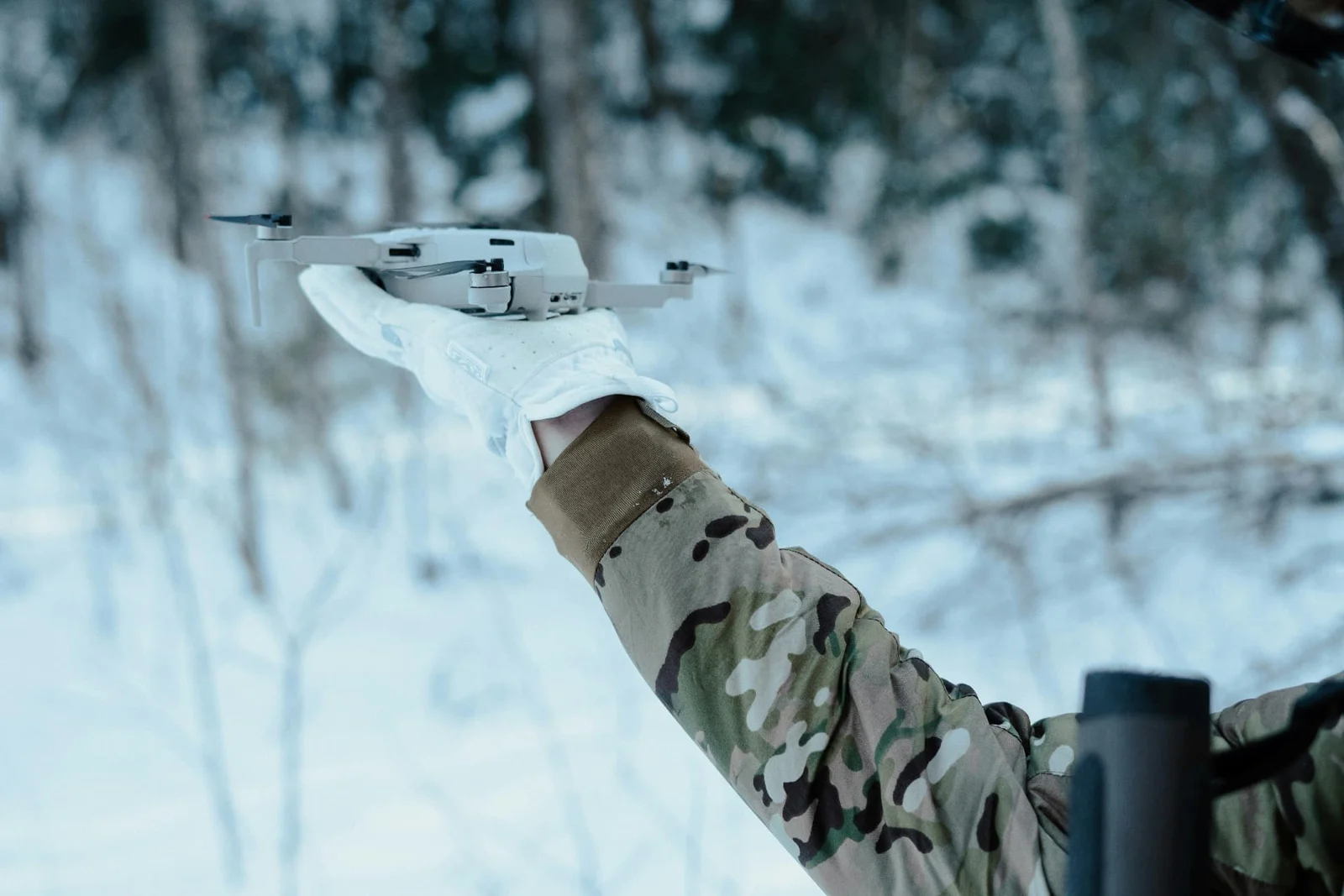
AI military logistics is entering a new era: one where intelligent systems can continuously optimise thousands of interconnected assets, learn from completed operations and adapt to unexpected disruptions in seconds. That prospect is informed by civilian experience, not a claim of proven military performance. The important shift is from finding an initial plan to keeping information and decisions useful as conditions change.
The complexity behind defence logistics
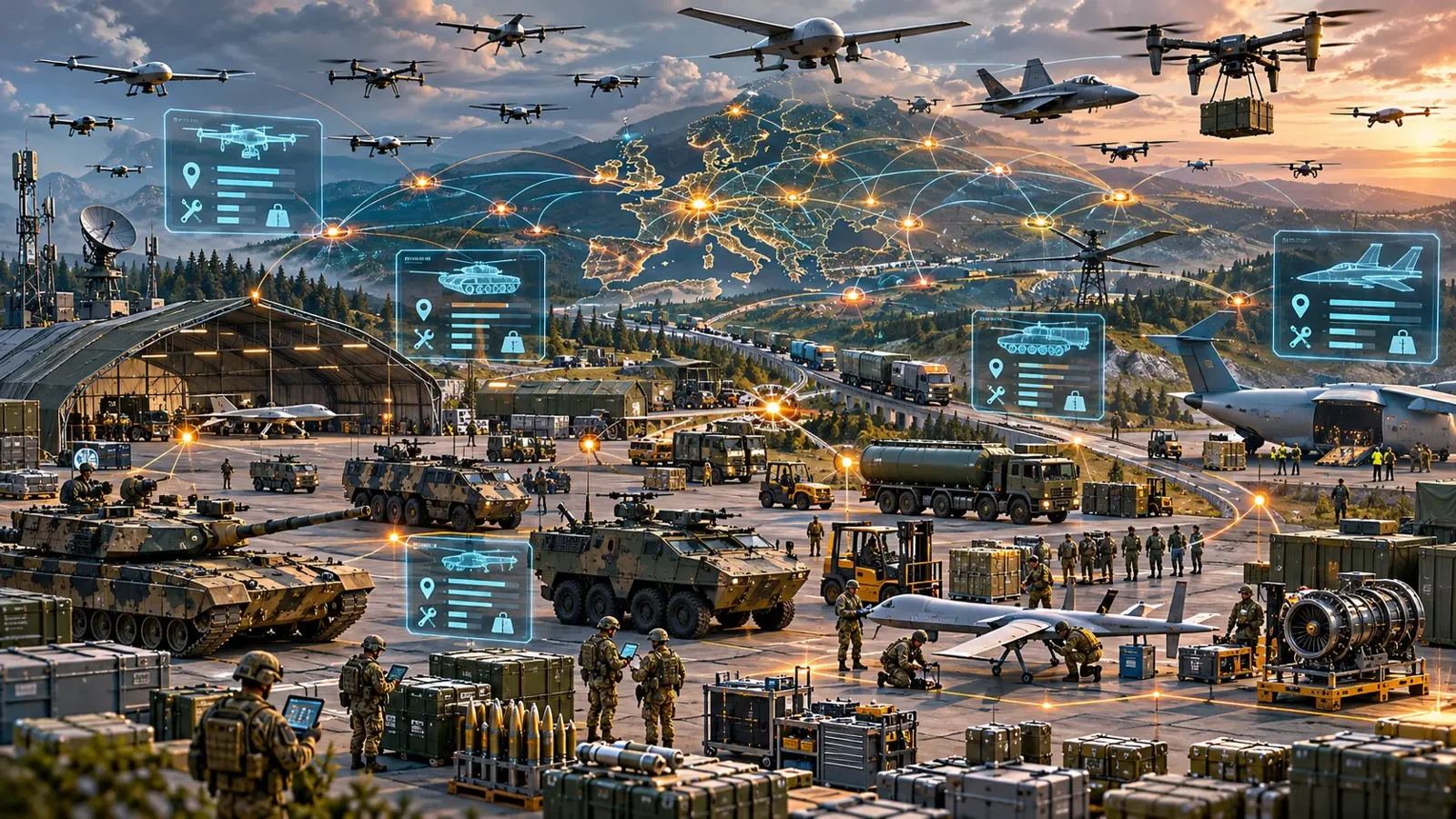
Imagine dozens of drone types with different capacities, roles, locations and maintenance needs, alongside tanks, fighter aircraft, helicopters, missiles, armoured vehicles, support trucks, spare parts, fuel, personnel, technicians, drivers, engineering machinery and infrastructure. Each has a location, capability, readiness state, availability, constraints and dependencies. This is a description of information complexity, not guidance for planning military movements.
A changed maintenance estimate can affect equipment availability, technician workload and spare-parts requirements. An incomplete record may undermine several downstream assumptions. People can understand individual problems, but cannot realistically optimise an entire large, continuously changing network manually. Nor can software guarantee a global optimum when inputs are uncertain. Useful support makes dependencies visible and keeps accountable people informed.
A DTN network case: civilian AI logistics in production
According to an account supplied by DTN's owner, an unnamed colleague's AI logistics system is in production across Europe. It orchestrates AI agents and optimises thousands of daily movements of cars and industrial machinery. The reported system learns from each completed movement and adapts to changed situations within seconds, including tyre punctures, driver sickness and schedule changes.
That is a compelling practical starting point: transporting vehicles and machinery combines resource availability, appointments, handling requirements and interdependent commitments. It is also a bounded claim. DTN has not independently audited the system, its performance measurements or its learning mechanisms. No company name, customer identities, quantitative savings or military deployment are established here.
The breakthrough is continuous adaptation, not the first optimum
Initial optimisation asks what a good plan looks like given today's information. Adaptive logistics asks what should be reconsidered when that information changes. A plan can be mathematically strong at breakfast and obsolete before lunch. Fast response matters because the disruption is rarely isolated: one unavailable resource can create delayed handovers, conflicting commitments and misleading expectations elsewhere.
Continuous adaptation therefore combines an updated view of reality with repeated evaluation of constraints. Learning adds another dimension: completed work can improve estimates used in future decisions. Neither feature eliminates human judgement. The goal is to reduce the gap between a changing situation and a comprehensible, reviewable response, rather than simply produce more recommendations.
AI-agent orchestration: specialised services, one controlled workflow
Conceptually, specialised agents can handle distinct tasks: checking records, estimating completion times, identifying inconsistencies or preparing candidate revisions. An orchestration layer coordinates which services run, what information they receive and where validation or approval is required. This is an architectural pattern, not a statement about the unnamed production system's implementation.
An optimisation engine then evaluates possibilities against authorised constraints. Event-driven replanning starts when a relevant change arrives rather than waiting for the next manual planning cycle. Feedback loops connect actual outcomes to subsequent analysis. Explicit interfaces, consistent identifiers and timestamps matter as much as the AI: agents working from incompatible records can amplify confusion.
AI-agent orchestration should not be confused with giving one model unlimited authority. Services need scoped permissions, error handling and an audit trail. DTN's existing article on AI orchestration in battle management systems explores the broader integration principles; the civilian case here does not validate military command-and-control capabilities.
A puncture, a sick driver and the knock-on effects
Consider an illustrative civilian transport day. A vehicle suffers a tyre puncture before a scheduled collection of industrial machinery. A separate driver reports sick. The immediate issue is not only two unavailable resources: later appointments, handovers and customer expectations may depend on them. A static schedule can keep showing commitments that are no longer credible.
A well-designed workflow would register the events, check affected dependencies and prepare revised options for a dispatcher. The DTN network account reports adaptation within seconds; it does not establish that every disruption is physically resolved that quickly. Computing a revision, approving it and carrying it out are different stages. People must still confirm safety, legal limits and actual availability.
The dispatcher should see what changed, which commitments are affected and what remains uncertain. Where information is missing, the system should ask for confirmation rather than invent a resource. This example illustrates why fast replanning is useful without claiming a particular measured outcome.
Self-learning is not the same as automatic replanning
Conventional rule-based optimisation uses explicit requirements and an objective to search for a suitable solution. It can replan rapidly without learning anything. Machine learning differs because it derives patterns or estimates from data, potentially improving predictions as completed movements reveal differences between expected and actual outcomes. The two approaches can complement each other.
“Learns from every movement” must not mean every observation immediately rewrites production behaviour. Outcomes may contain errors, exceptional conditions or misleading correlations. A responsible approach validates data, evaluates candidate model changes against agreed criteria, releases approved versions under control and monitors for deterioration. Rollback and human challenge remain essential.
The owner reports learning in the civilian system; its validation process is not independently documented here. Buyers should distinguish demonstrated prediction quality from marketing language about self-learning. They should ask what changes, who approves it and how the organisation recognises when a learned pattern no longer applies.
Decision intelligence and a common operational picture
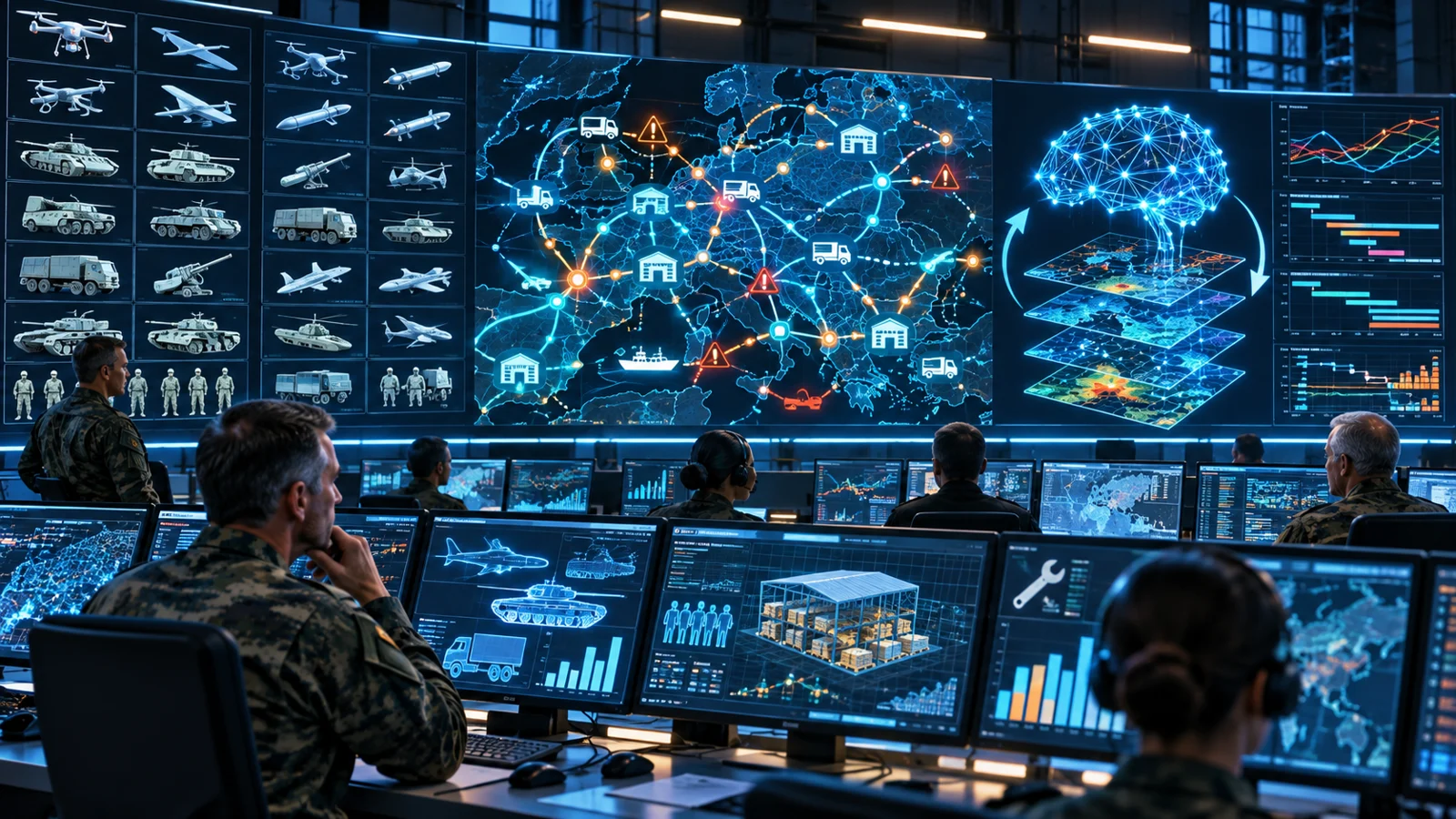
Decision intelligence connects observations, interpretation and accountable choices. A logistics-focused common operational picture can bring asset condition, availability and data freshness together, while preserving access restrictions. It should show provenance and conflicting reports, not turn incomplete information into a deceptively confident dashboard.
For defence logistics, that could mean a clearer non-tactical view of maintenance and infrastructure dependencies. Decision support should expose assumptions and let users inspect the evidence. A summary is not a decision authority. Our guide to the common operating picture and AI-supported situational awareness examines why shared information is useful only when its quality and limitations remain visible.
Potential defence relevance requires additional safeguards
Civilian logistics experience offers useful questions for military logistics optimisation, not a ready-made defence capability. A military supply chain introduces different sensitivity, uncertainty and resilience requirements. Assessment should begin with a bounded administrative, maintenance or infrastructure use case, using synthetic or appropriately approved data rather than sensitive operational information.
Security review must address access, data separation, software dependencies and malicious inputs. Resilience evaluation should examine stale records, connectivity loss and recovery. Governance must define who can approve changes and who remains accountable when outputs are wrong. The NIST AI Risk Management Framework offers official background for governing and evaluating AI risks; it does not certify this case or establish military suitability.
Human oversight must be meaningful, with the ability to inspect, reject and correct outputs. This article provides no tactical movement planning, weapons targeting or autonomous engagement guidance. Defence applicability remains a potential area for careful evaluation, not a proven transfer from civilian production.

Software is the core; a container is optional infrastructure
Edge computing can place selected services close to permitted data sources and reduce dependence on remote connections. Off-grid deployment may support digital continuity where conventional infrastructure is limited, but local computing still has finite power, cooling, storage and maintenance capacity. Disconnected services also need a clear treatment of stale external information.
The innovation is trustworthy software: integration, orchestration, optimisation and controlled learning. A rugged container is only one possible deployment form, alongside suitable on-premises servers or other infrastructure. It is not proof of autonomy, cybersecurity or unlimited runtime. DTN's air-gapped AI guide explains the practical distinction between private, local and genuinely isolated systems.
Talk to People Who Have Built AI Logistics Systems
DTN can connect interested organisations to specialists with practical civilian logistics AI projects. A useful first conversation starts with the information problem: what changes frequently, where manual coordination breaks down and what evidence would demonstrate improvement. It should also clarify what has actually been deployed and what still needs evaluation.
Contact Defence Technology Network through the existing enquiry form to discuss a civilian logistics challenge or a bounded defence feasibility question. An introduction is not a guarantee of savings, access to a military-ready product or an endorsement. The strongest starting point is practical experience, transparent limits and a shared plan for validation.
Frequently asked questions
What is AI military logistics?
AI military logistics is the use of AI-supported analysis and optimisation to help people understand logistics information, resource availability and changing constraints in a military supply chain. This article explores non-tactical decision support and potential defence applications; it does not describe a proven military deployment or autonomous weapons targeting.
How does agent orchestration help?
AI-agent orchestration coordinates specialised services so that data checks, predictions, optimisation and review happen in a consistent workflow. It can expose dependencies and respond to new events, but it still needs reliable inputs, explicit permissions and human accountability. Multiple agents do not automatically make a system accurate.
Can civilian logistics AI be used in defence?
Civilian experience can inform defence evaluation, but it is not proof of suitability. Security, uncertainty, resilience, data permissions and governance require separate assessment. DTN's reported European production case concerns cars and industrial machinery, not military deployment.
What makes self-learning different from conventional optimisation?
Conventional optimisation searches for a good solution within supplied rules and constraints. Machine learning can update estimates or patterns from completed operations. Replanning alone does not prove learning: any learned change needs validation, controlled release, monitoring and a way to revert if performance deteriorates.
Sources and further reading
DTN network connections
Talk to People Who Have Built AI Logistics Systems
Discuss a practical civilian logistics challenge or a bounded defence feasibility question. DTN can connect interested organisations to specialists with hands-on civilian logistics AI projects; military suitability requires separate evaluation.
Related insights
C4ISR
AI Orchestration in Battle Management Systems: The Next Evolution of Command and Control
How connected AI services, sensor fusion and interoperable software architectures could transform military decision support.
C4ISR
Common Operating Picture (COP): How AI Supports Situational Awareness
What a common operational picture is, why data quality, provenance and latency decide its value, and where AI helps under human review.
AI & Data
Air-Gapped AI: How Private AI Systems Work Without Cloud Connectivity
How private AI deployment works in isolated networks: architecture, model updates, security controls and the real trade-offs of offline AI systems.