Engineering Insights
Test in Ukraine: How International Defence Technology Companies Can Explore Testing Opportunities
An independent guide to Brave1’s published testing pathways, application preparation and compliance questions for international defence technology companies.
· 7 min read · DTN Editorial
For international defence technology companies, Test in Ukraine is a programme to investigate through official channels—not a promise of access or a procurement shortcut. Understanding the published pathways and preparing a clear, compliant introduction are sensible first steps.
Defence Technology Network is an independent platform and is not affiliated with or endorsed by Brave1 or the Test in Ukraine programme.
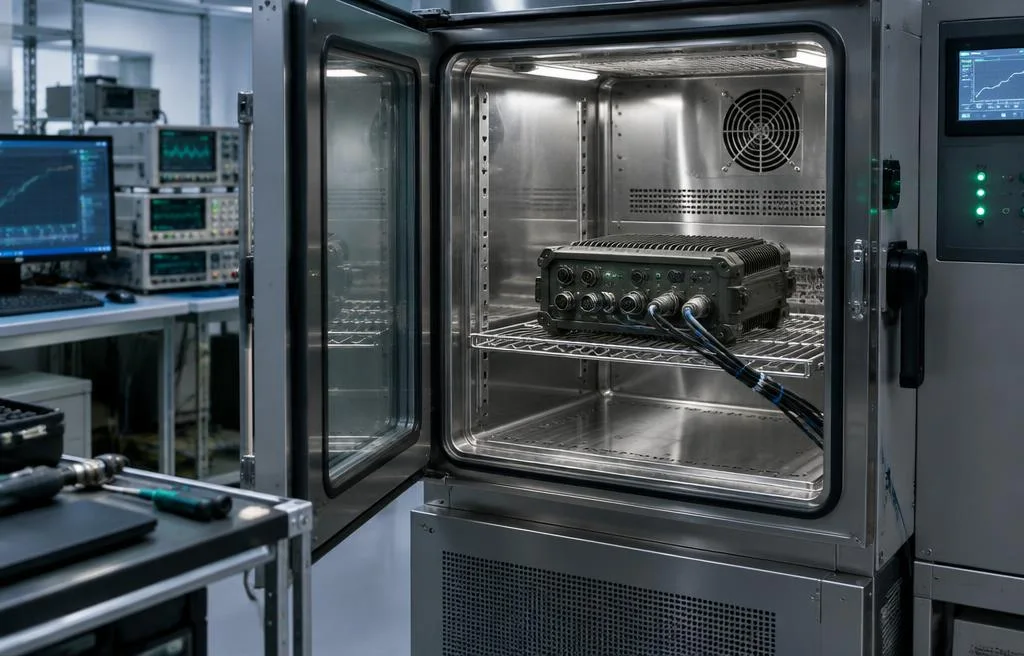
Illustrative hero image: laboratory testing of communications equipment, not a programme facility or evidence of participation.
What is Test in Ukraine?
Test in Ukraine is a Brave1 platform for international defence technology manufacturers exploring product testing in Ukraine. The Ukrainian government’s launch announcement, published on 18 July 2025, describes testing foreign technologies with military user feedback. Brave1’s international-projects page also identifies it as a platform for testing foreign defence technologies in Ukraine.
For a manufacturer, the attraction is learning how a defined product performs against practical defence requirements. The programme’s public presentation emphasises testing grounds, experienced users and feedback. That is different from a generic commercial testing marketplace: the focus is military technology relevant to Ukraine’s defence needs, with participation governed by the programme rather than by a supplier-directory listing.
This guide summarises public information checked on 11 November 2026. It is an application-preparation overview, not permission to ship equipment, travel or conduct trials. Official programme information and applicable law should be checked again before commitments are made.
Official background: the Ukrainian government’s programme launch announcement and Brave1 international projects overview.
Who is it for?
The official portal lists priorities including unmanned aerial vehicles (UAVs), unmanned ground vehicles (UGVs), counter-UAS, communications and navigation, and electronic warfare/signals intelligence. Its wider list also includes AI/ML and other defence technologies. These are published areas of interest, not an assurance that every product in a listed category is eligible or will be accepted.
International manufacturers should explain the actual defence application and the configuration proposed for assessment. A communications developer, for example, can describe interoperability and reliability objectives without supplying sensitive operating details. A counter-UAS company should distinguish detection from mitigation and identify which subsystem it wants evaluated.
Ask the official programme to confirm current country, company, ownership and product eligibility. The English import/export manual includes restrictions relating to manufacturers and affiliates connected with Russia, Belarus and North Korea. Read the full wording and obtain current confirmation; a category match alone does not settle eligibility or compliance.
Check the official portal’s current technology priorities. Related DTN research covers drones and UAS, counter-UAS and military communications.
Two possible testing pathways
The portal uses the labels ‘Test Together’ and ‘leave it to us’. Under Test Together, its description says the company brings the product and participates in testing, allowing direct observation and adjustments. This describes a participation model, not unconditional permission for personnel to enter Ukraine or attend a particular activity.
Under ‘leave it to us’, the public description says the company hands over the product to Brave1, provides online training on operating it, and Brave1 conducts testing and delivers a detailed results report. This is the coordinated-testing-and-feedback pathway described by the programme itself; it should not be presented as a service delivered by DTN.
Before choosing, clarify what involvement is permitted, what support is needed, who is responsible for equipment and how feedback will be documented. Confirm the specific arrangement with the official programme. Do not assume identical scope, reporting detail, availability or scheduling across products.
Source: Test in Ukraine — Testing Scenarios, using the programme’s own pathway labels.
Preparing an application
Prepare a concise, non-sensitive technology introduction before completing the official application. Start with intended use: the defence requirement addressed, the product’s boundaries and the users or systems it supports. Separate demonstrated capabilities from development targets so reviewers can understand what exists today.
Describe development maturity using concrete evidence: prototype or production status, available specimens, configuration identifiers, previous test reports and known limitations. If you use a technology readiness level, explain the evidence behind it rather than relying on a number alone. Identify which hardware and software version would be supplied.
Define testing objectives as measurable questions: which functions require evaluation, what evidence would support improvement, and what acceptance criteria are proposed. Avoid claiming that a trial will establish universal performance or replace a customer’s qualification process. Record assumptions and the conditions that limit existing results.
Review export control and import requirements before arranging movement. Military or dual-use classifications, the exporting jurisdiction’s permissions, Ukrainian import procedures, customs documentation and possible return or temporary-import arrangements need specialist attention. The official manual is general guidance and explicitly recommends checking current legislation; it is not a licence or case-specific legal advice.
Agree intellectual-property and data boundaries before sharing sensitive material. Clarify confidentiality, ownership of test results, permitted disclosure and access to technical information. Prepare safety documentation, handling constraints and training needs suitable for the product. Keep controlled designs, credentials and sensitive operational information out of public introductions and ordinary enquiry forms.
Read the official English import/export manual for testing purposes (PDF, dated 10 July 2025). For complementary qualification evidence, see Military Equipment Testing: Standards and Environmental Tests.
What to expect and what is not guaranteed
The programme advertises user expertise, testing infrastructure and structured feedback. Those descriptions explain its intended value, but do not establish an individual applicant’s approved scope. Ask what assessment is proposed, what evidence can be shared and what responsibilities each party accepts before treating a trial as confirmed.
An application does not guarantee acceptance, a particular testing date, military procurement, funding, certification or a commercial contract. This article does not confirm any exact turnaround time, cost arrangement or present approval procedure. Obtain these details from the programme for your case, including logistics, equipment custody, insurance, reporting and any follow-up expectations.
Field feedback and laboratory qualification answer different questions. A useful trial may reveal usability or integration issues, while controlled environmental testing establishes evidence against defined methods. Neither should be overstated. Plan how observations will be reviewed, how changes will be tracked and which additional verification a prospective buyer may require.
How Defence Technology Network can help
DTN’s independent role is helping companies present their technology clearly and find relevant publicly available defence opportunities and research. A concise introduction can connect the defence problem, product maturity, evidence and proposed testing objectives in language that technical and business reviewers can assess.
Optional DTN advisory is separate from the programme’s application. Contacting DTN does not submit a Brave1 application, establish eligibility or secure official access. DTN does not claim a programme partnership, endorsement, private contacts or authority to approve testing. Any advisory scope must be discussed independently; the official programme remains responsible for its own decisions.
For companies also serving infrastructure-protection markets, regulatory context matters separately from military trials. Our CER Directive guide explains EU critical-entity resilience considerations; it is not a Test in Ukraine eligibility requirement or evidence of product approval.
Read our EU Critical Entities Resilience (CER) Directive guide for that separate resilience context.
How to apply through the official portal
Open the official Test in Ukraine portal and use its ‘APPLY FOR TESTING’ link. Follow the current instructions there rather than treating this article as a copy of the application form. Review the programme description, relevant documents and eligibility information before transmitting company or product details.
Use the official application channel for programme participation. Verify requests for further information through official channels, and confirm any authorisations and practical arrangements before shipping or travelling. If instructions are unclear or appear different from the published manual, ask the programme and your compliance advisers to resolve the discrepancy.
Keep a dated record of the information submitted, the configuration proposed and any confirmed terms. A well-prepared introduction makes discussion clearer, but it does not replace legal review, safety assessment or the programme’s selection process.
Apply through the official Test in Ukraine portal. This external application is separate from contacting DTN.
FAQ
Is Test in Ukraine open to every international defence company?
Do not assume universal eligibility. Published priorities indicate areas of interest, while company, country, product and compliance restrictions still need confirmation. Check the official programme’s current requirements for your company and proposed technology.
Must company personnel participate in testing?
The portal describes both Test Together and ‘leave it to us’. The latter includes online operator training and testing conducted by Brave1. Confirm which pathway is available and suitable for your product, and the specific responsibilities involved.
Does successful testing guarantee procurement or certification?
No such guarantee is established by the sources cited here. Testing feedback is evidence for development and evaluation; procurement decisions, regulatory permissions and qualification requirements remain separate matters.
Can DTN submit or approve my programme application?
DTN is independent and has no claimed official application or approval role. Apply through the programme’s portal. Optional help with a technology introduction is a separate DTN enquiry, not a route to official access.
Is the import/export manual sufficient permission to ship?
No. It is general guidance, not an authorisation. Confirm current legal requirements for classification, export, import, customs and any return movement with qualified advisers and the appropriate authorities before transport.
Need help preparing your technology introduction?
Contact DTN through the existing network enquiry form and describe your request. Optional independent advisory is separate from applying to Test in Ukraine; the form does not submit a programme application.
Contact Defence Technology NetworkRelated insights
Standards & Compliance
Military Equipment Testing: Standards, Environmental Tests and How to Choose a Laboratory
An engineering guide to tailored environmental testing, MIL-STD-810H, NATO standards and the evidence buyers need when selecting equipment and laboratories.
Standards & Compliance
CER Directive: EU Requirements, Deadlines and Security Technologies Explained (2026)
What the Critical Entities Resilience Directive requires, the key dates for Member States and critical entities, and how operators can map resilience duties to security technologies.