AI & Data
The Autonomous AI Container: Off-Grid Decision Intelligence for Modern Defence
An emerging concept: explainable, local-first AI that helps people reconcile fragmented observations they cannot process in seconds, while human commanders stay in control.
· 9 min read · DTN Editorial
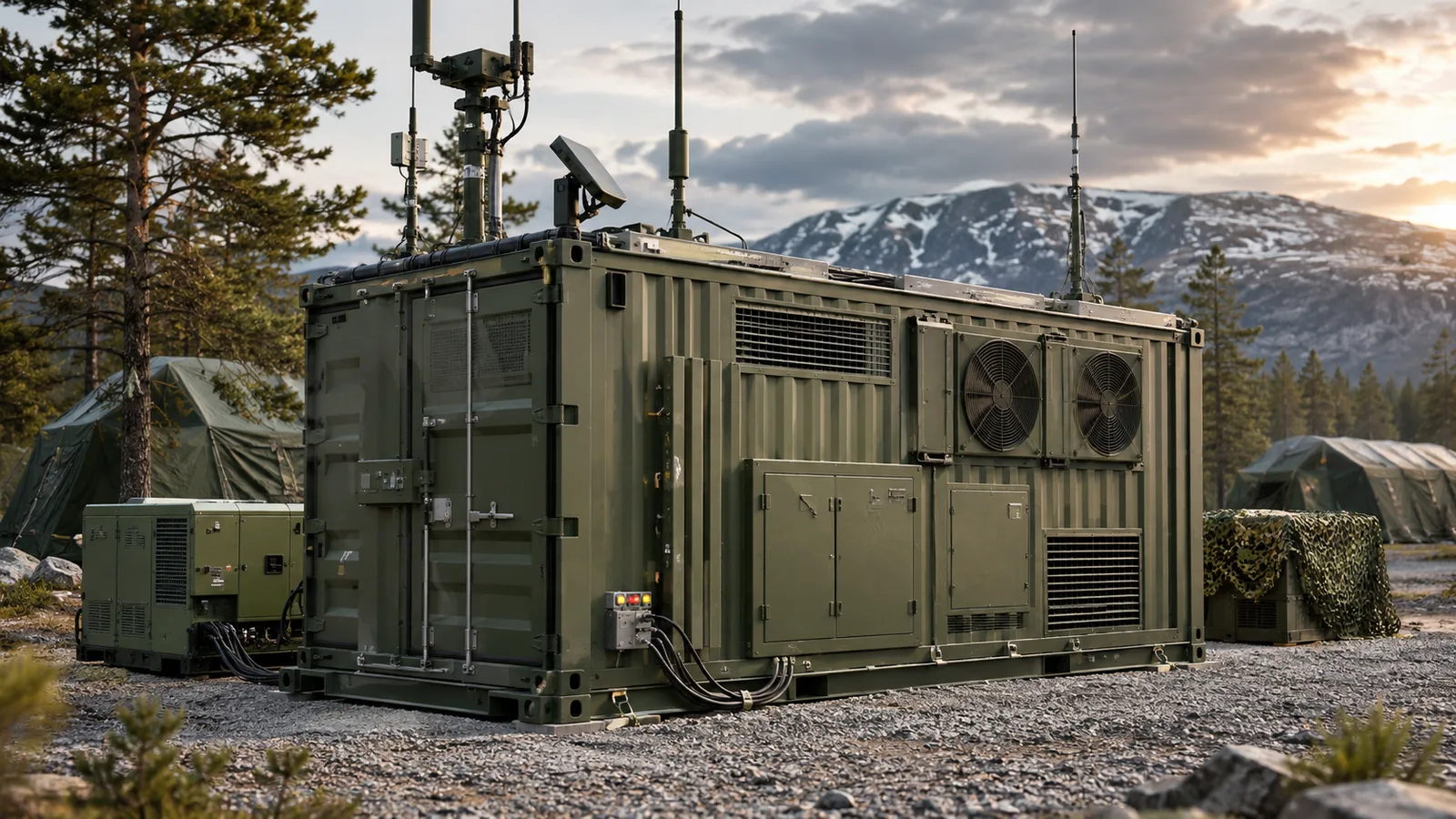
Modern defence organisations rarely suffer from a lack of data. They suffer from more data than any person can understand in the time available. Sensors, drones, logistics records, maintenance logs, weather feeds and messages arrive continuously, often in different formats and with different levels of reliability. The person expected to make sense of it is still a human being, with human limits on attention and memory.
This article explores a concept DTN calls the autonomous AI container: deployable, locally controlled software that could help people reconcile fragmented observations into a picture they can question. The container is the least interesting part. What matters is whether software can make overwhelming information understandable without taking decisions away from the people accountable for them.
The real bottleneck is human cognitive capacity
A modern operating environment can produce hundreds or thousands of observations that change constantly. One report says a road is open; another, an hour older, says it is blocked. A supply count disagrees with a maintenance record. A sensor goes quiet, and nobody knows whether the cause is a fault or something more significant.
Even brilliant, experienced experts cannot reconcile all of that in seconds. Working memory is limited, fatigue degrades judgement, and stress narrows attention towards whatever seems most urgent. Under pressure, people tend to anchor on the first plausible explanation and overlook contradicting evidence.
The problem, then, is not that people lack skill. It is that the volume, speed and inconsistency of information exceed what any unaided mind can process. That gap is where decision intelligence could help, provided it supports human judgement rather than replacing it.
The Growth Engine analogy: what business intelligence teaches
The idea has a familiar civilian parallel. A marketing intelligence workflow, such as the kind DTN uses to understand audience demand, can bring together hundreds of signals: search interest, campaign results, page behaviour and enquiry quality. Synthesising 400 or more data points into a few clear priorities is something software does well and people do slowly.
The lesson transfers, but only partly. In marketing, a wrong conclusion costs budget. In defence, information is far more fragmented, sources may be deliberately misleading, uncertainty is higher and the consequences of error are far more serious. The analogy shows that synthesis is valuable; it does not show that a defence version would be easy, safe or proven.
The software is the innovation; the container is infrastructure
A rugged olive-green container with its own power, cooling and computing is easy to picture, so it tends to dominate the conversation. But it is only an enclosure. Its job is to keep software running where fixed data centres or reliable connections are unavailable.
The real proposition is the software layer: integrating sources, tracking where each observation came from, exposing conflicts and explaining its reasoning. A container without trustworthy software is just expensive hardware. Our separate article on private edge AI for defence logistics discusses the deployment infrastructure in more detail.
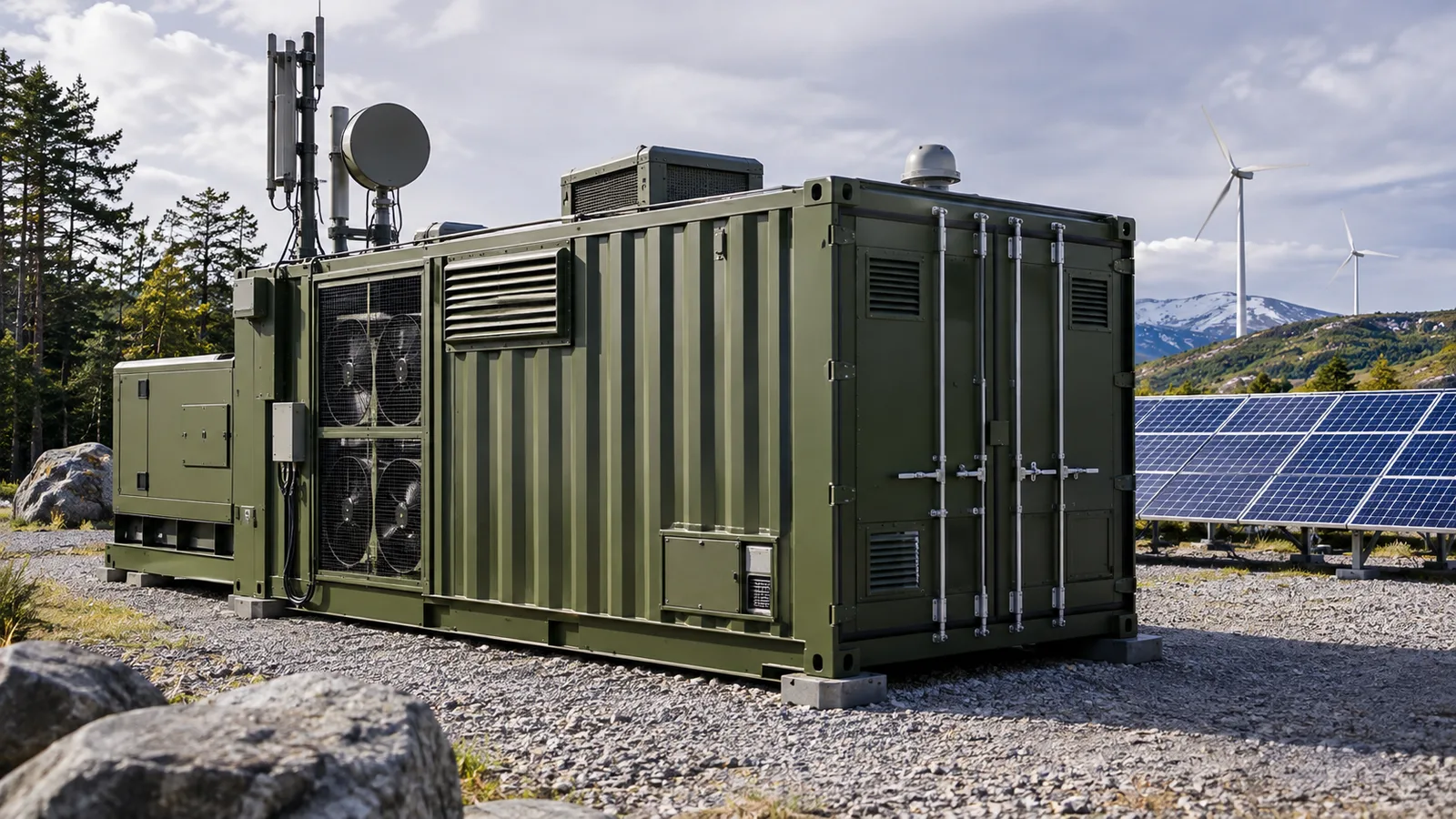
From fragmented observations to a common, explainable picture
Conceptually, the software would work in stages. Each stage should be visible to the people relying on it, not hidden inside a single opaque answer.
Source integration
Drones, fixed sensors, logistics systems, maintenance records and command systems are all possible data-source categories. Each uses different formats, update rates and reliability. The first task is simply bringing them into a shared structure without losing meaning.
Provenance and timestamps
Every observation should carry where it came from, when it was recorded and when it was received. Standards such as the W3C PROV model show how provenance can be recorded consistently. Without it, a stale report can look as current as a fresh one.
Contradictions and uncertainty
Rather than silently choosing one version, the software should flag conflicts and indicate how confident it is. An honest “these two sources disagree” is more useful than a confident summary that hides the disagreement.
Summarisation
The system would then condense the evidence into a short overview of what has changed and what remains unclear, so people can focus their attention where it matters most.
Transparent explanations and human review
Any decision support must show its evidence: which observations it used, which it discounted and why. People review, question and correct it. That correction should also be recorded, creating an audit trail. The wider idea of a shared view is covered in our guide to the common operational picture.
Why offline and local-first processing matters
Connections to distant cloud services can be degraded, contested or simply unavailable. Local-first processing aims to keep analysis running when links fail, with synchronisation when they return.
There are four main arguments. Continuity: analysis does not stop when the network does. Data sovereignty: sensitive information stays under the organisation’s control. Latency: processing close to the data avoids round trips to remote servers. Reduced exposure: fewer external connections can mean fewer paths for attack.
There are real tradeoffs. Local hardware has limited power, cooling and computing capacity, so models must be smaller or more specialised. Updates, patches and model improvements are harder to deliver. Local data may become out of date. No system is perfectly independent; it still relies on fuel or energy, maintenance, supply chains and, eventually, connection. Our article on air-gapped AI examines the isolation side of this question.
Human authority and accountability
AI can be wrong. It can be misleading when its training data does not match reality, and it can be manipulated by poisoned or spoofed inputs. A fluent explanation can make a mistaken conclusion more persuasive, not less.
For that reason, a decision intelligence concept must never be presented as an autonomous weapons or command system. It should not select targets, allocate weapons or generate tactical courses of action. Its role is narrower: organise evidence, highlight uncertainty and explain itself, so that accountable people can decide.
This aligns with established principles. The NATO principles of responsible use stress lawfulness, accountability, explainability and governability. The NIST AI Risk Management Framework offers a structured way to identify, measure and manage such risks across the life of a system.
Practical challenges and what would need independent validation
Before any claim of usefulness, a concept like this would need to survive independent scrutiny across several areas.
- Data interoperability: can the software reliably interpret real sources, with their gaps, quirks and inconsistent formats?
- Reliability: how does it behave when sensors fail, data arrives late or the hardware is under environmental stress?
- Cybersecurity: can it resist tampering, spoofed inputs and compromised components? Guidance such as the guidelines for secure AI system development sets a baseline.
- Human factors: do people actually understand the explanations, and does the system reduce workload rather than add another screen to watch?
- Testing: realistic, repeatable evaluation by bodies independent of the developers, with published limitations.
- Governance: clear rules on who may use outputs, how errors are reported and how the system is retired or updated.
None of these has been demonstrated for this concept. They are the questions that would decide whether it is worth building.
Conclusion: AI analyses. AI explains. Humans decide.
The case for off-grid decision intelligence does not rest on rugged hardware or impressive autonomy. It rests on a simple observation: people now face more changing information than they can reconcile, and that gap is growing.
Software that integrates sources, records provenance, exposes uncertainty and explains itself could help close it, if it is built carefully, tested independently and governed responsibly. The principle should stay fixed regardless of the technology: AI analyses. AI explains. Humans decide.
Frequently asked questions
Is the autonomous AI container an existing product?
No. It is an emerging concept discussed by DTN editorially. No deployed system, tested accuracy, certification or operational performance is claimed.
What does “autonomous” refer to here?
Autonomy of the infrastructure: the ability to keep computing, power and cooling running without a cloud connection or on-site staff. It does not mean autonomous decisions or autonomous use of force.
How is this different from air-gapped AI?
Air-gapped AI is about isolating systems from external networks. This concept focuses on a different problem: helping people reconcile far more changing observations than they can process, with explanations they can check.
Could the AI be wrong?
Yes. Sensors fail, sources conflict, models make errors and adversaries may try to manipulate inputs. That is why outputs must show their evidence and uncertainty, and why people remain responsible for every decision.
Who might help develop such a concept?
Data integration, explainable AI, cybersecurity, human-factors and rugged infrastructure specialists, working with independent test bodies and end users under appropriate governance.
Sources and further reading
Concept partners
Help test whether explainable off-grid AI can work
DTN invites explainable AI, data integration, cybersecurity and human-factors specialists to discuss feasibility and independent validation.
Related insights
AI & Data
Air-Gapped AI: How Private AI Systems Work Without Cloud Connectivity
How private AI deployment works in isolated networks: architecture, model updates, security controls and the real trade-offs of offline AI systems.
Emerging Technologies
Private Edge AI: A Coherent Operational Picture for Defence Logistics
Exploring sensor and logistics data fusion, resource planning and explainable decision support under human oversight.
C4ISR
Common Operating Picture (COP): How AI Supports Situational Awareness
What a common operational picture is, why data quality, provenance and latency decide its value, and where AI helps under human review.